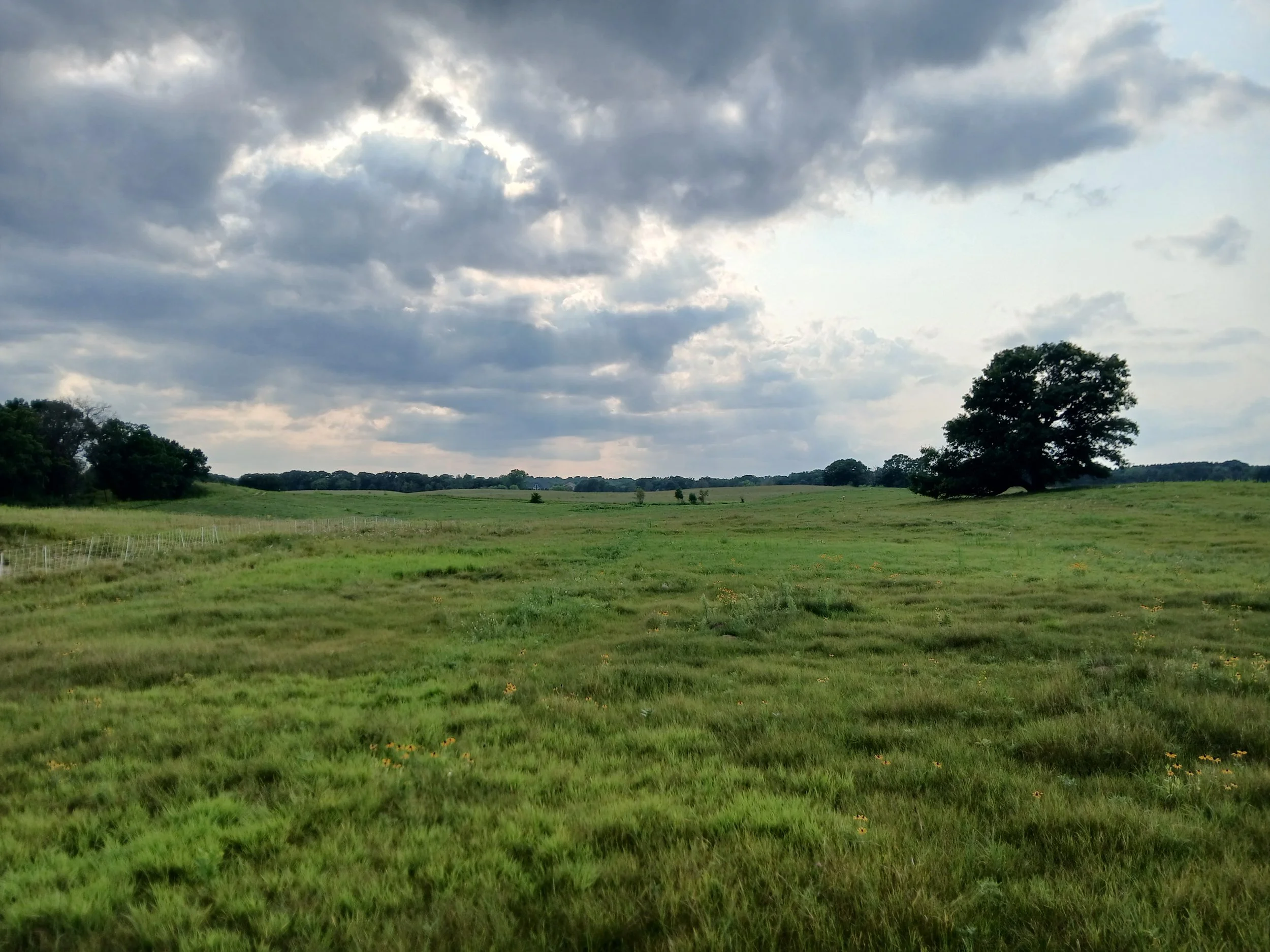
Lake Elmo Park Reserve - Project update
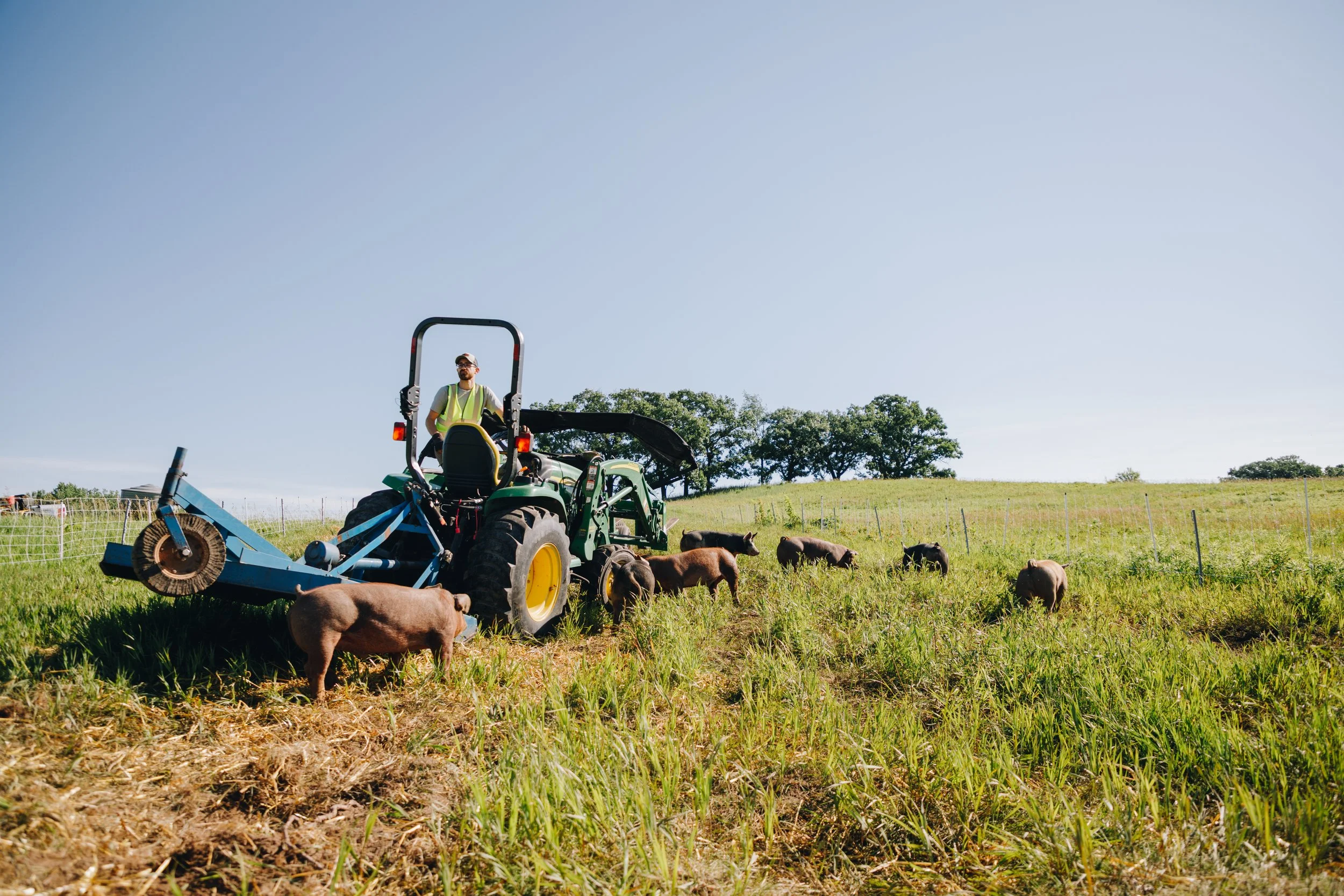
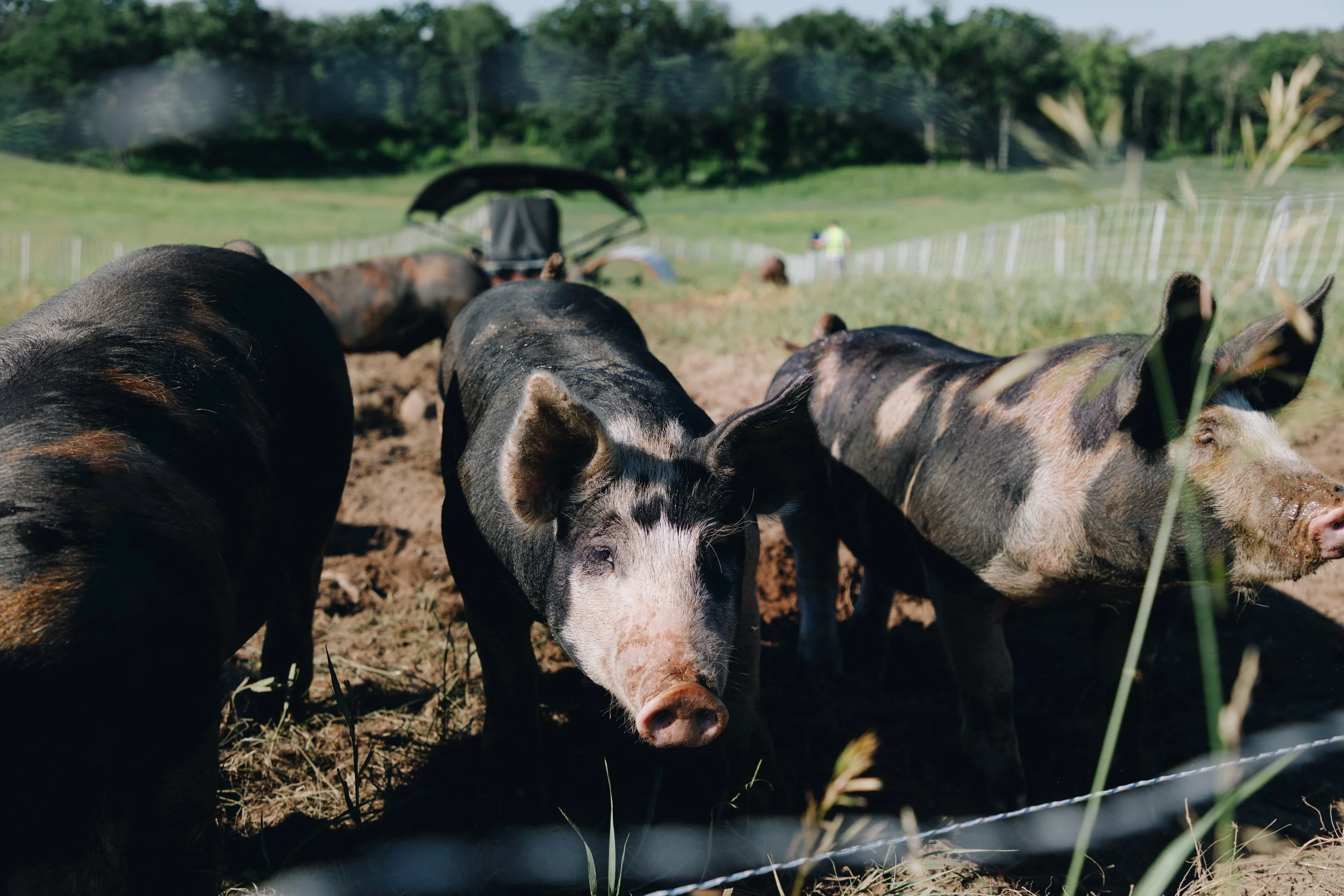
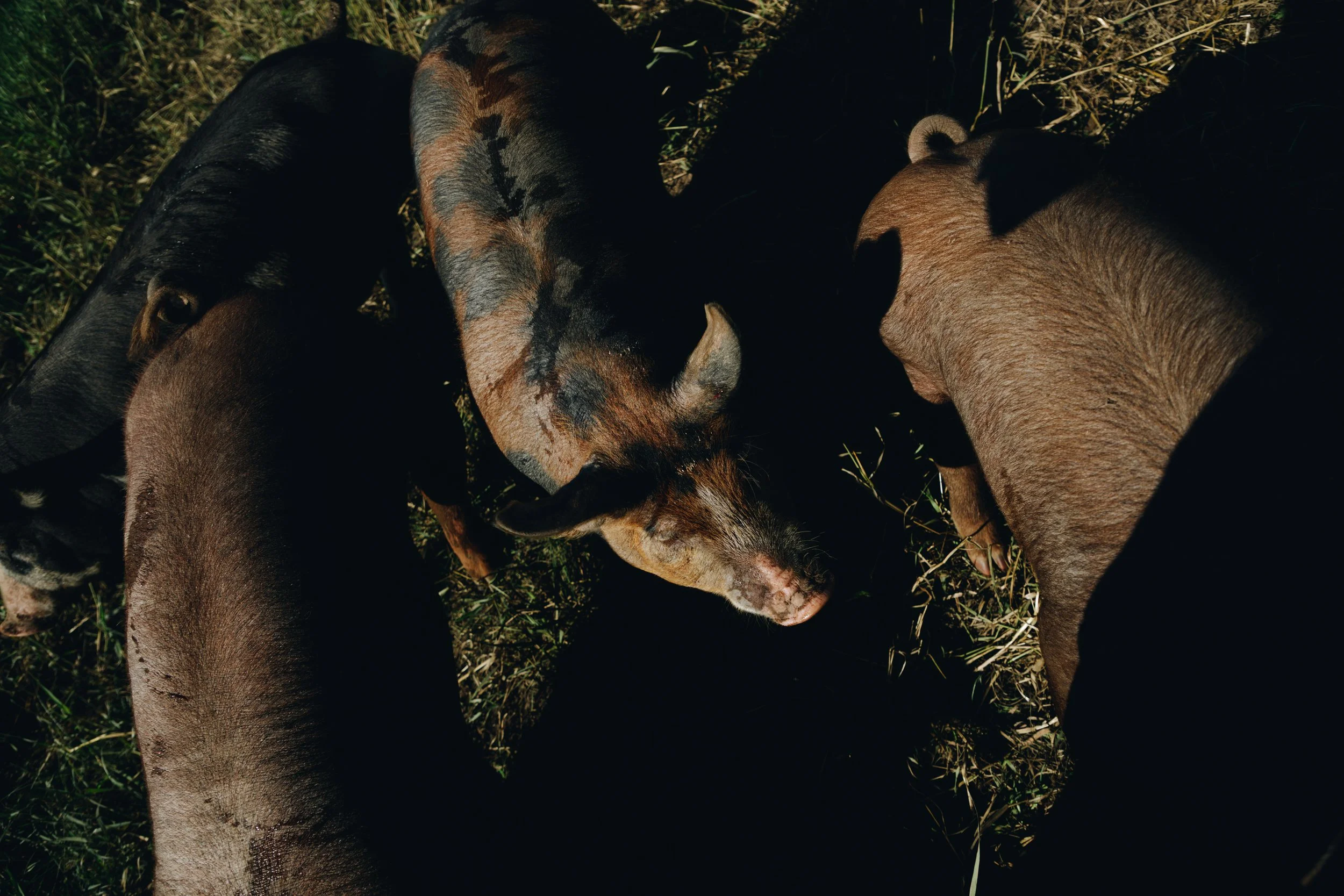
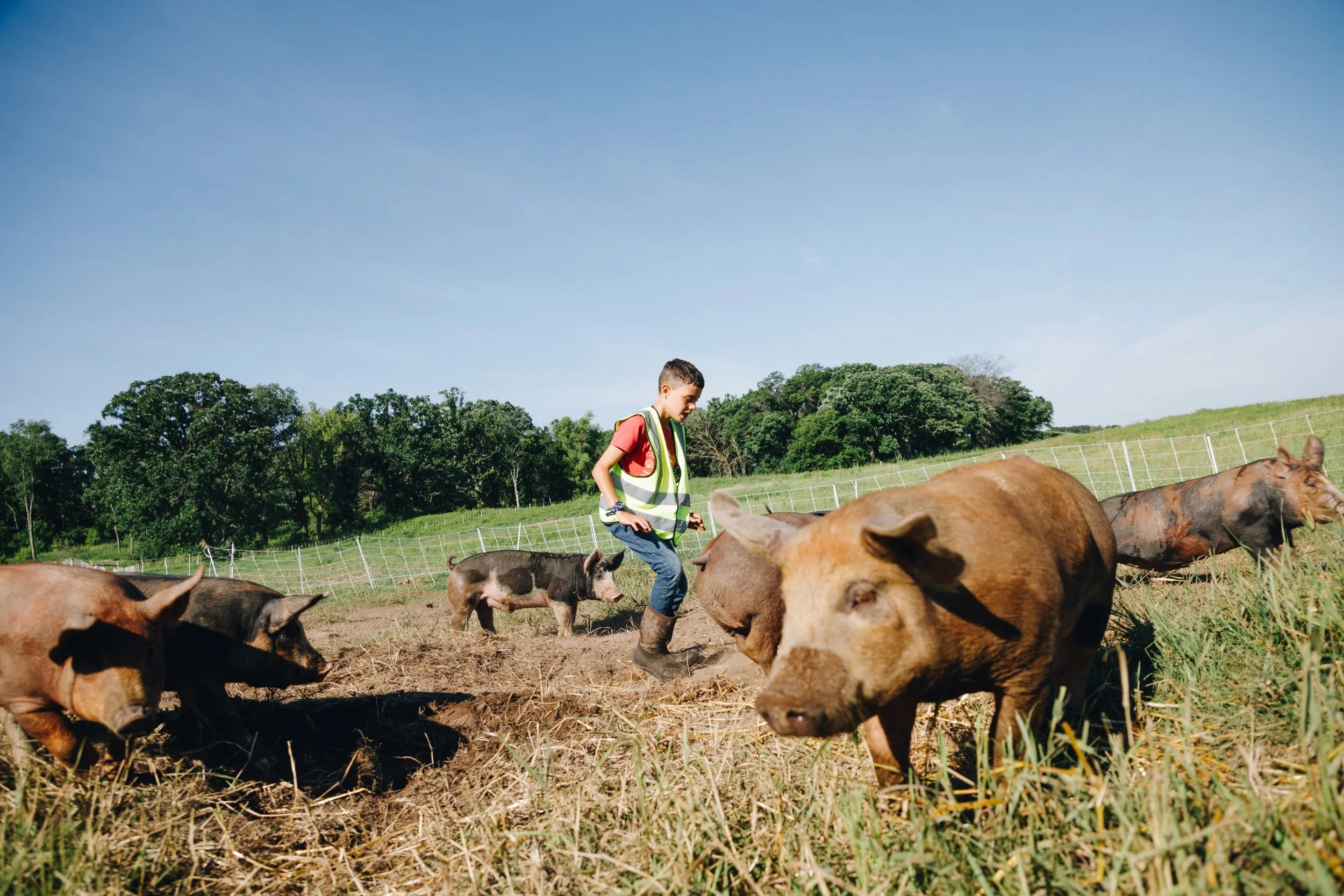
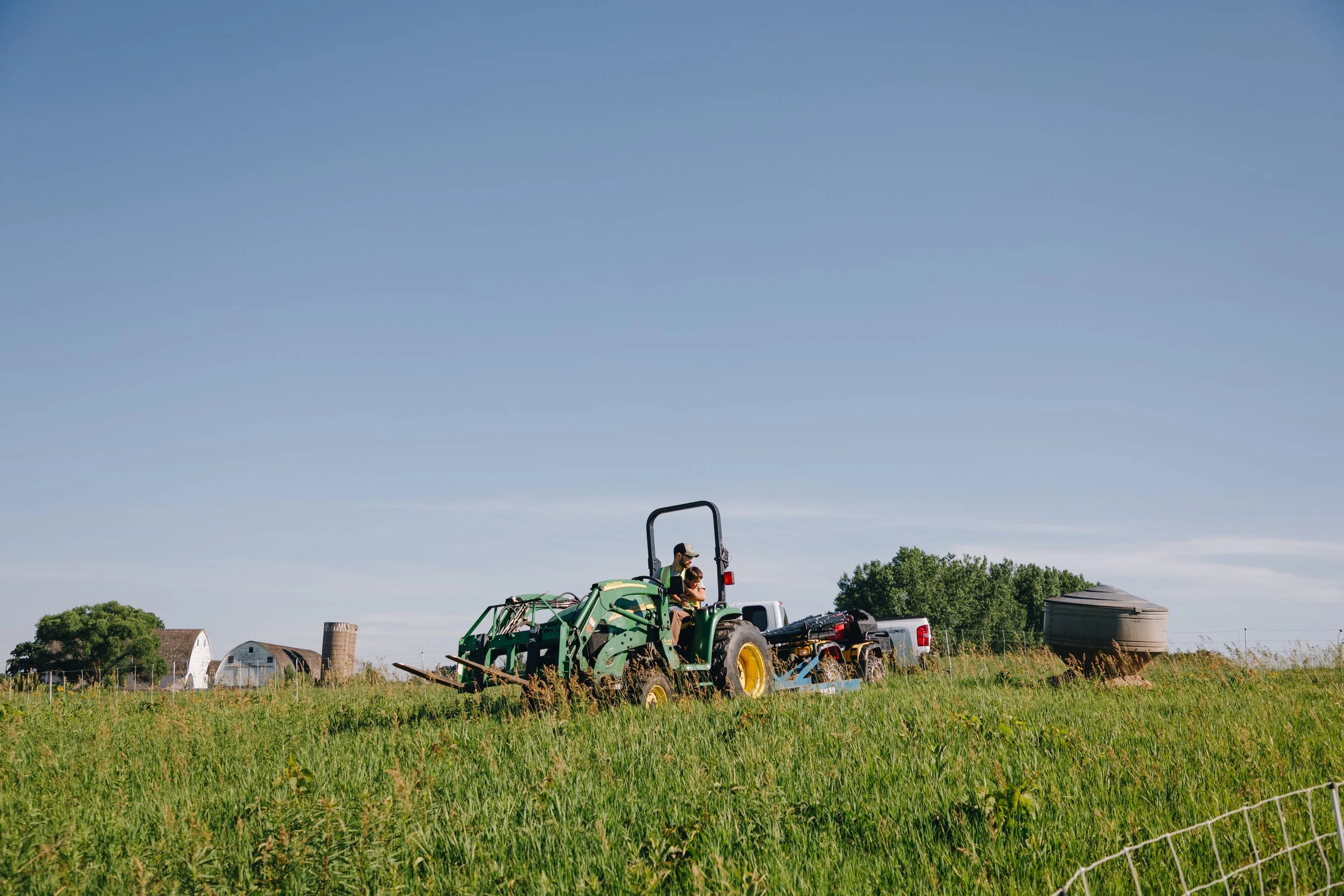
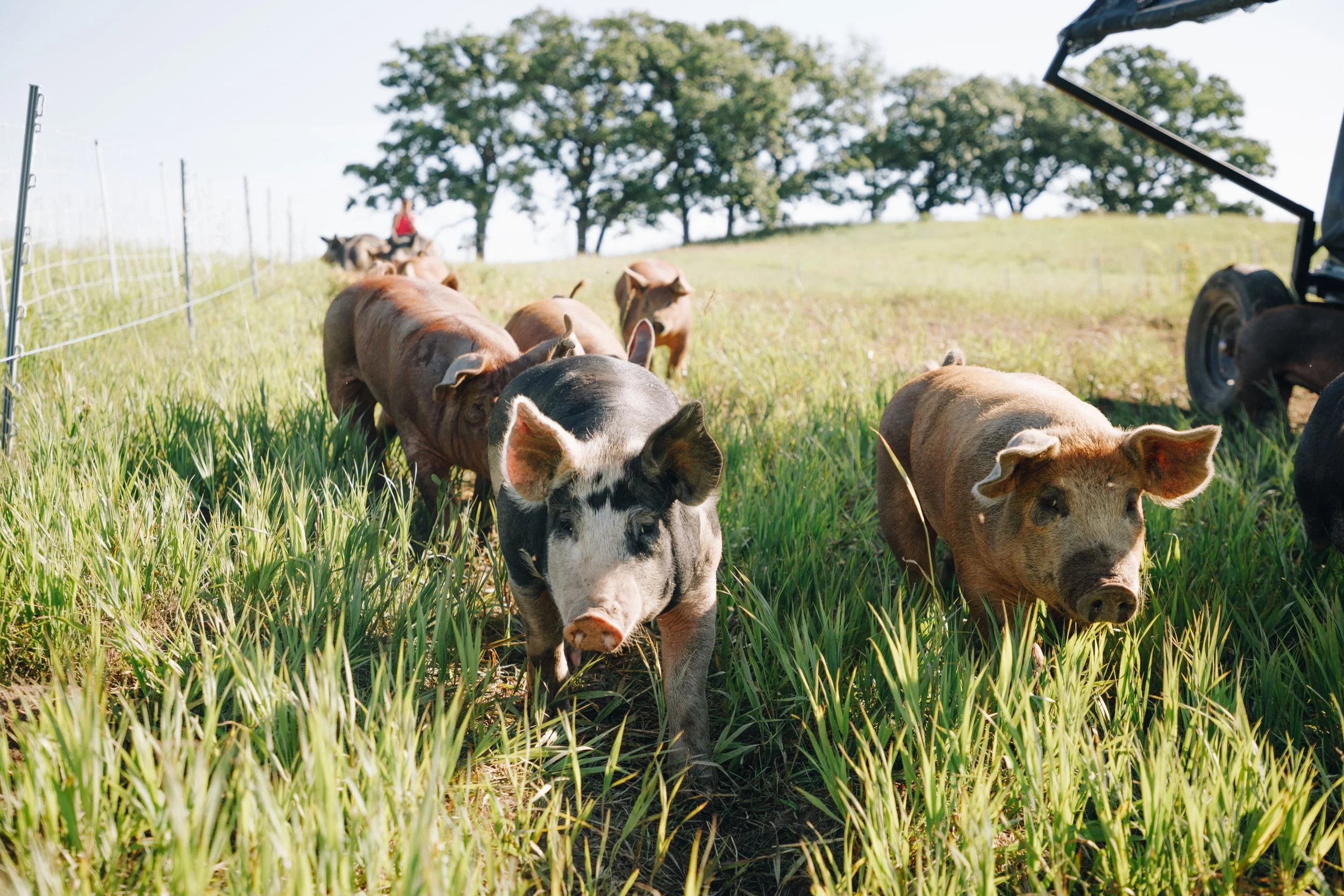
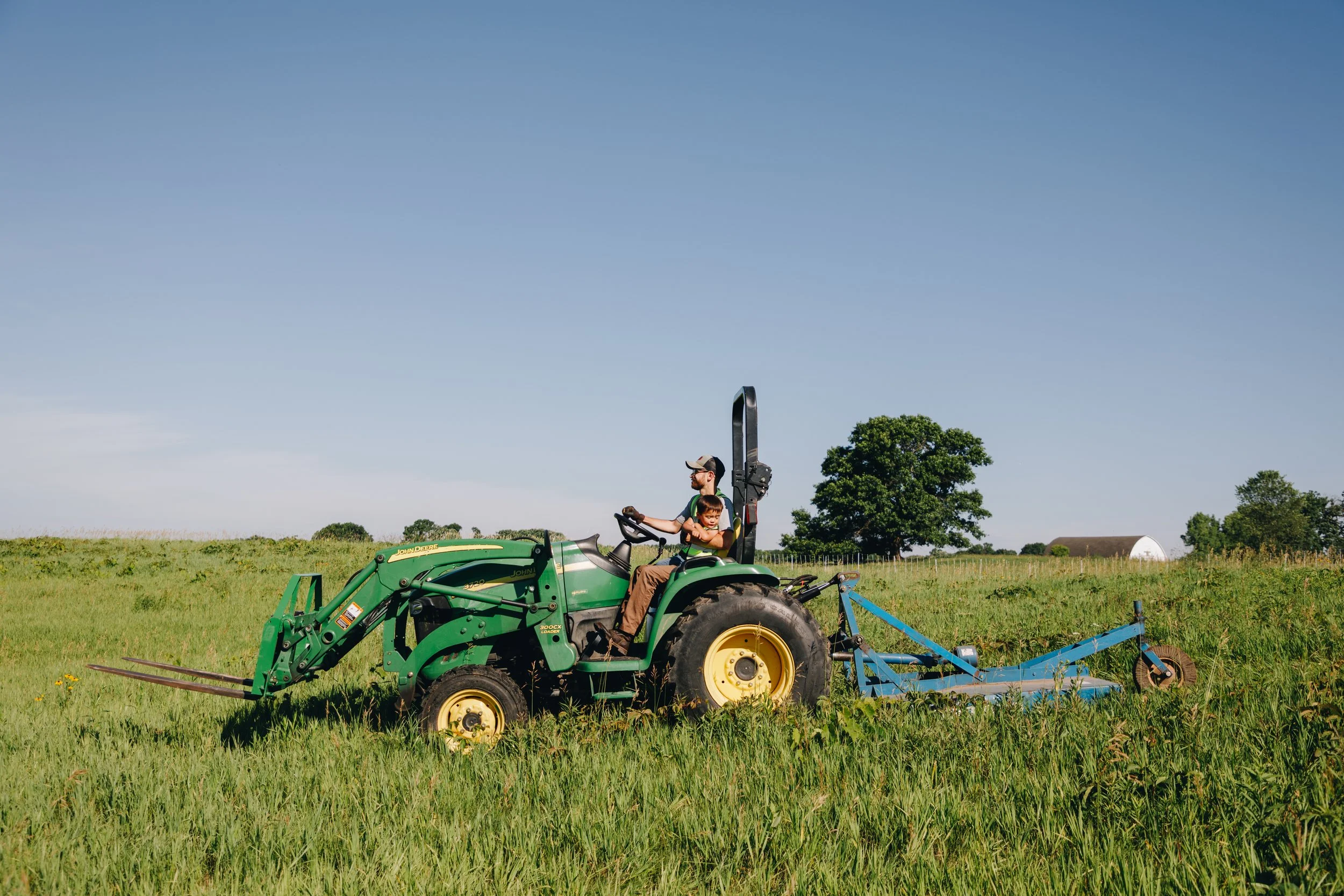
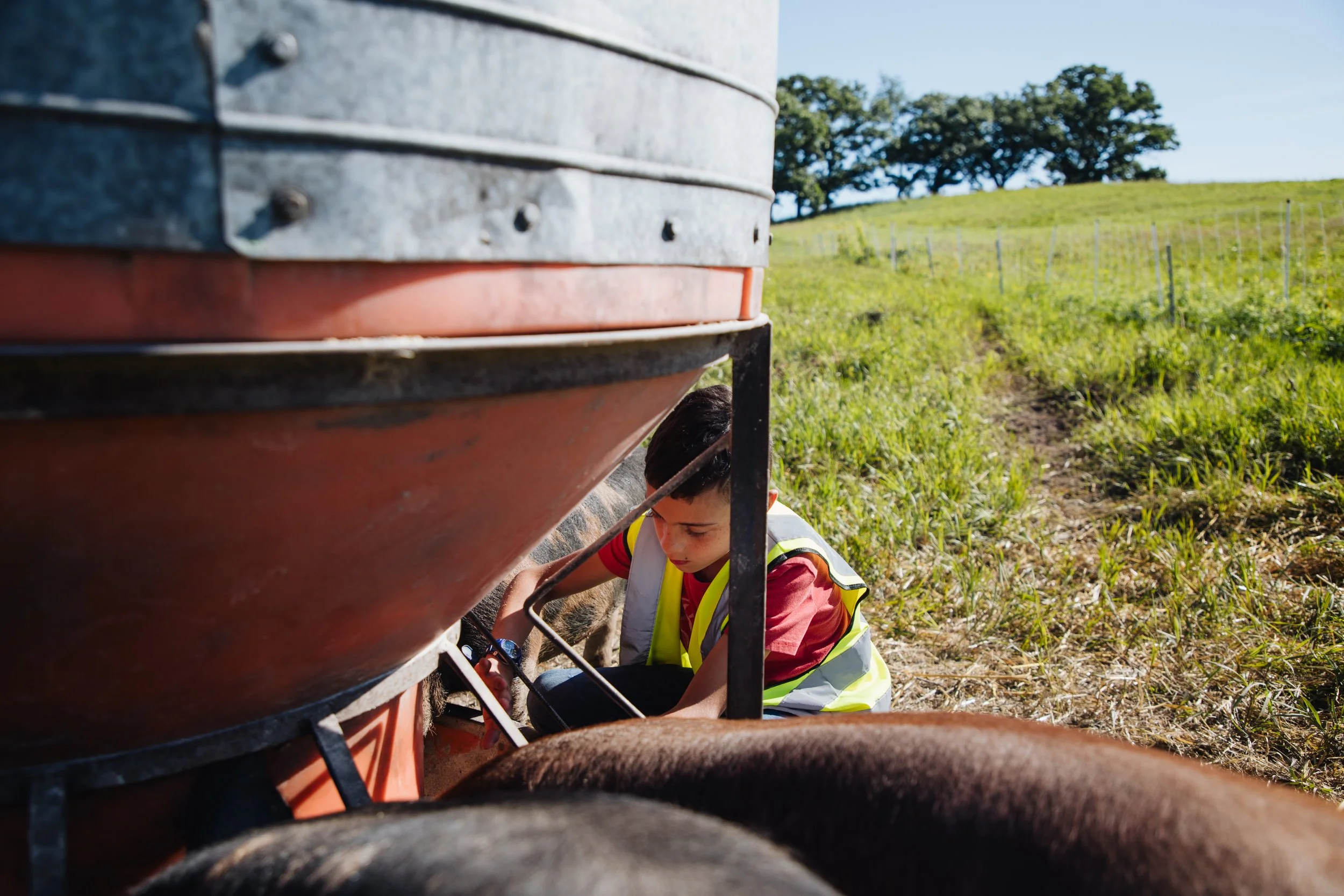
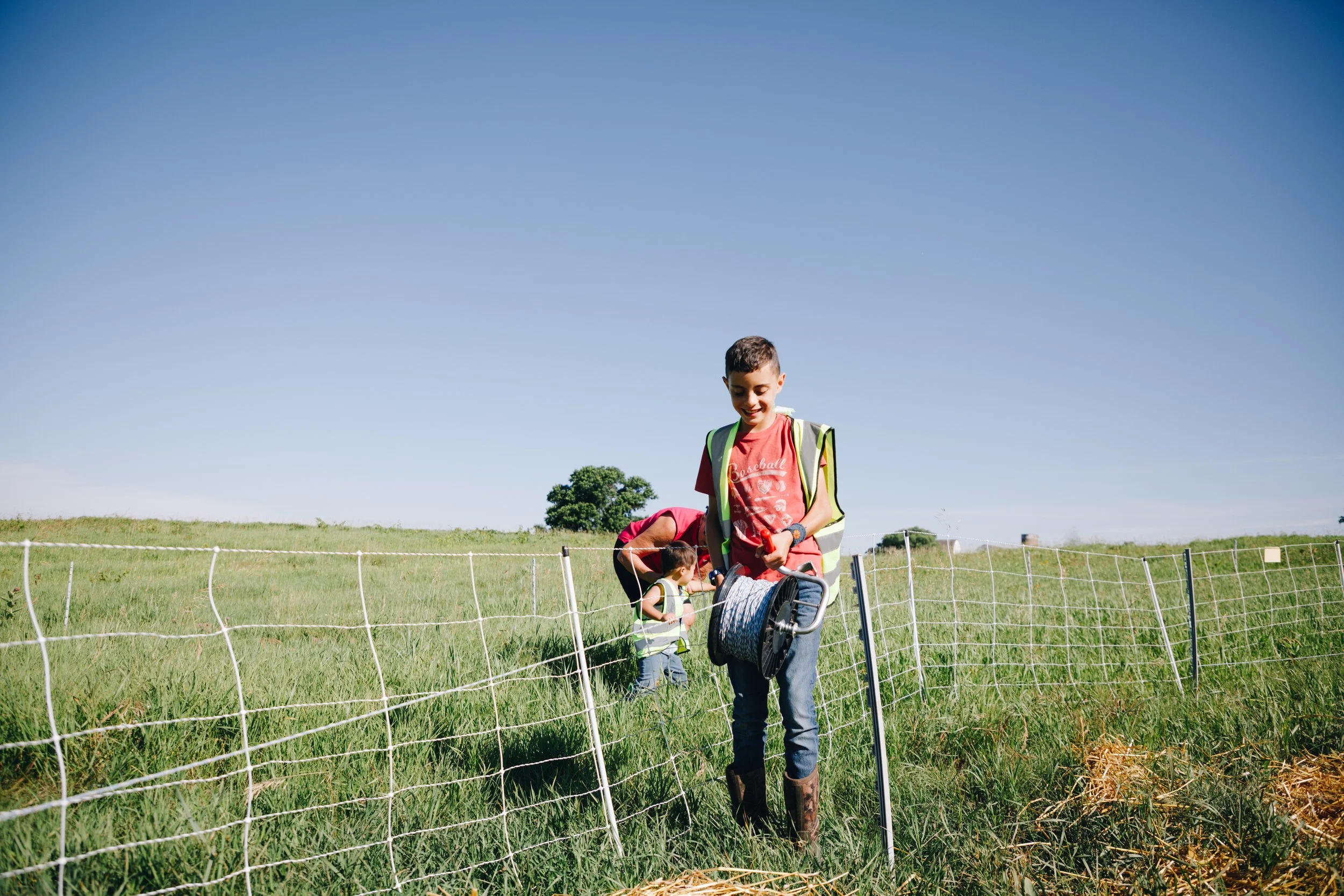
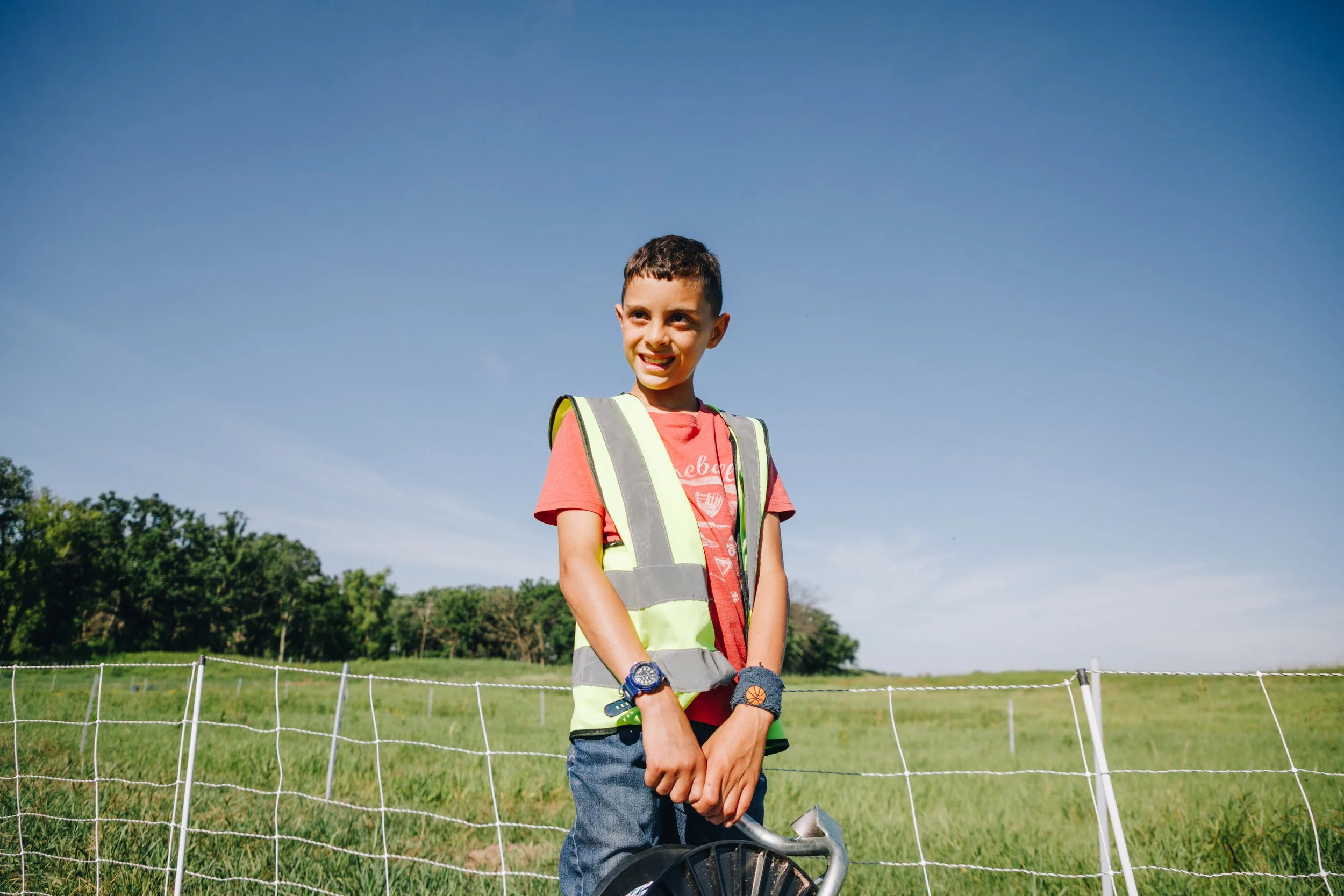
We’re three months into our project at Lake Elmo Park Reserve so I wanted to share an update. With the help of our photographer Elizabeth, we’ve captured some awesome moments while working at the park. If you only looked at these beautiful photos you may assume things are going perfectly, but that’s not the whole picture. There have been many challenges and lessons learned. I guess that comes with being a first generation, regenerative farmer … there are endless experiences that challenge your physical abilities, patience, and determination. Unlike conventional agriculture, which aims to specialize, standardize, and control nature, regenerative agriculture is dynamic and works to align with nature and its ever changing reality.
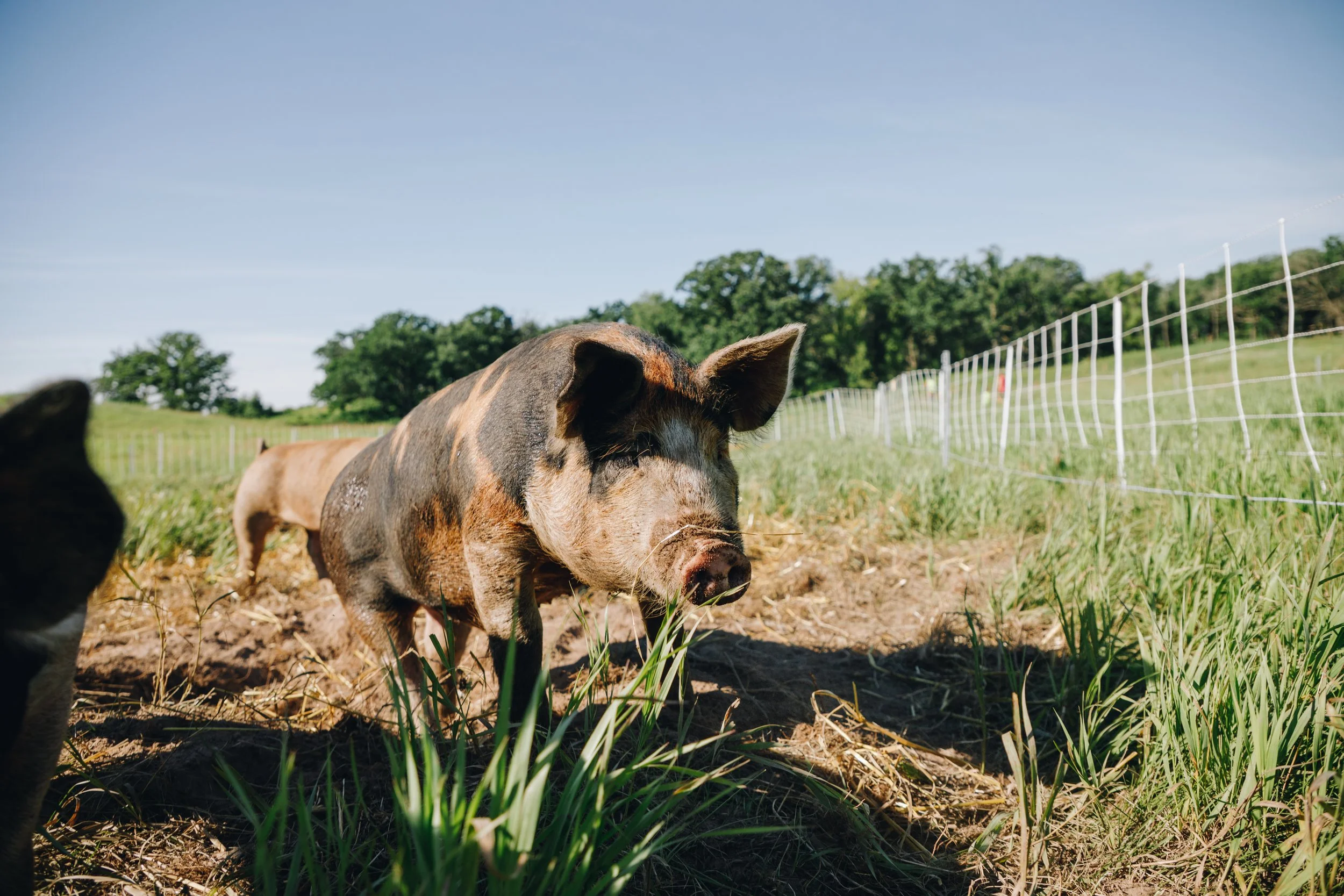
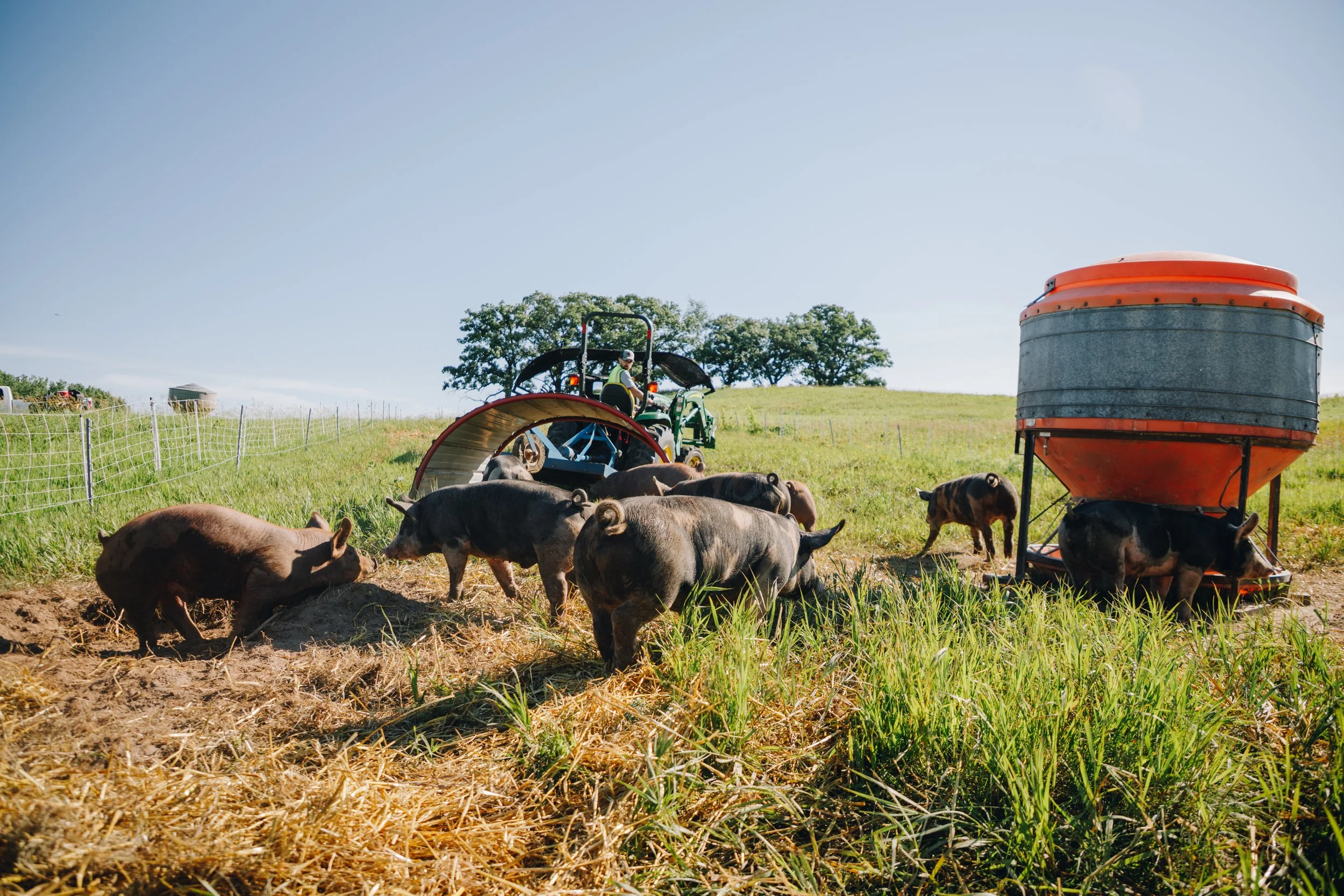
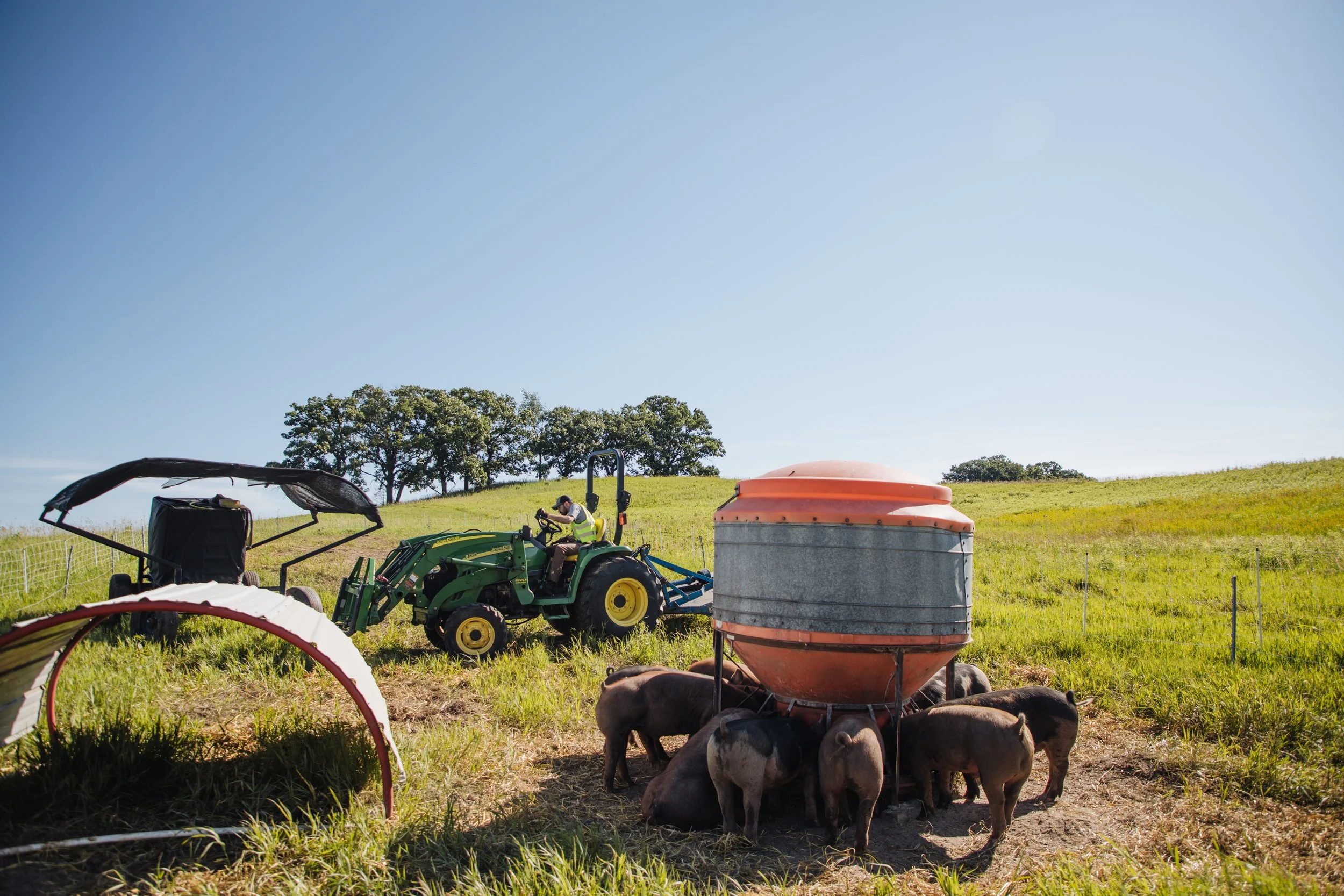
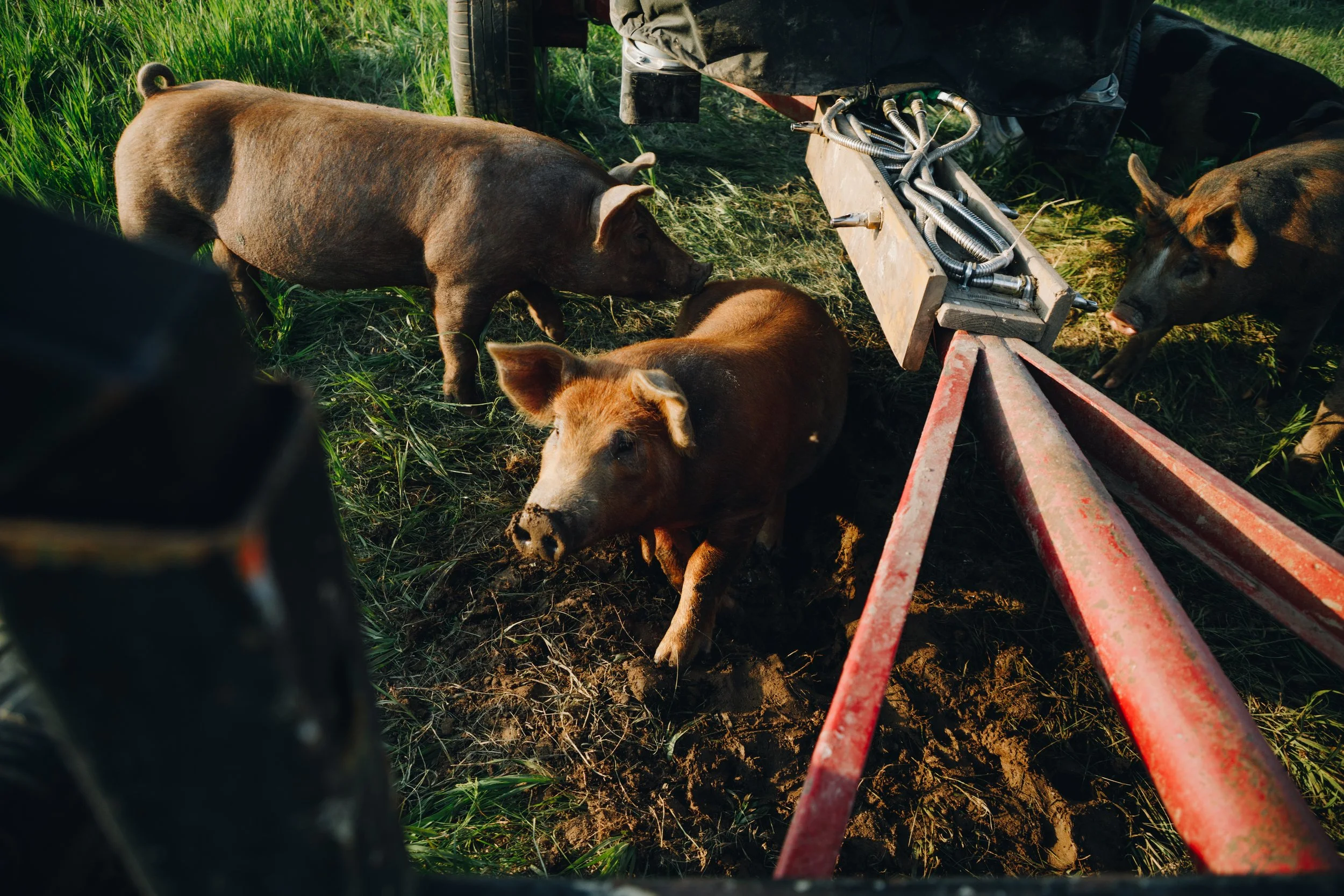
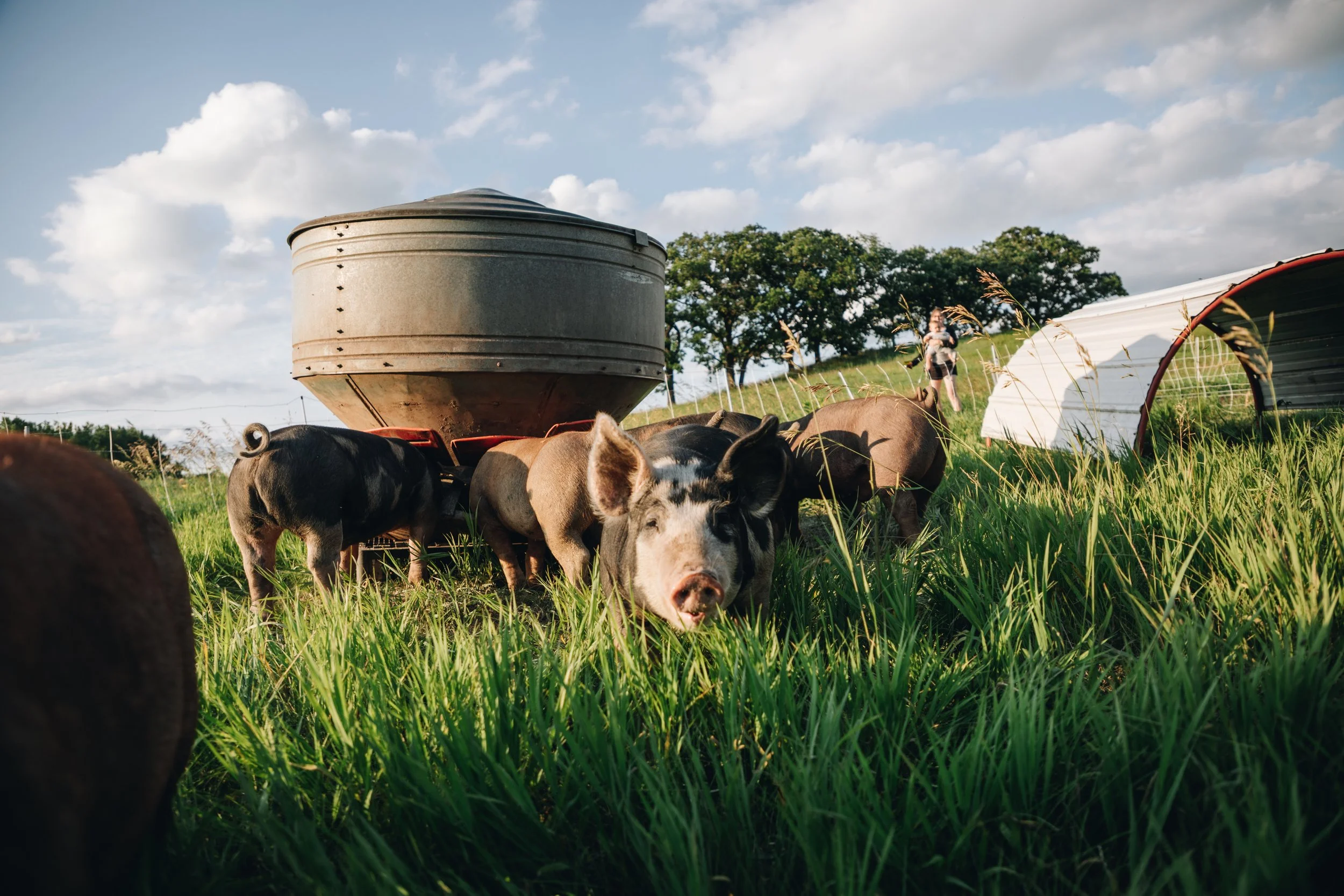
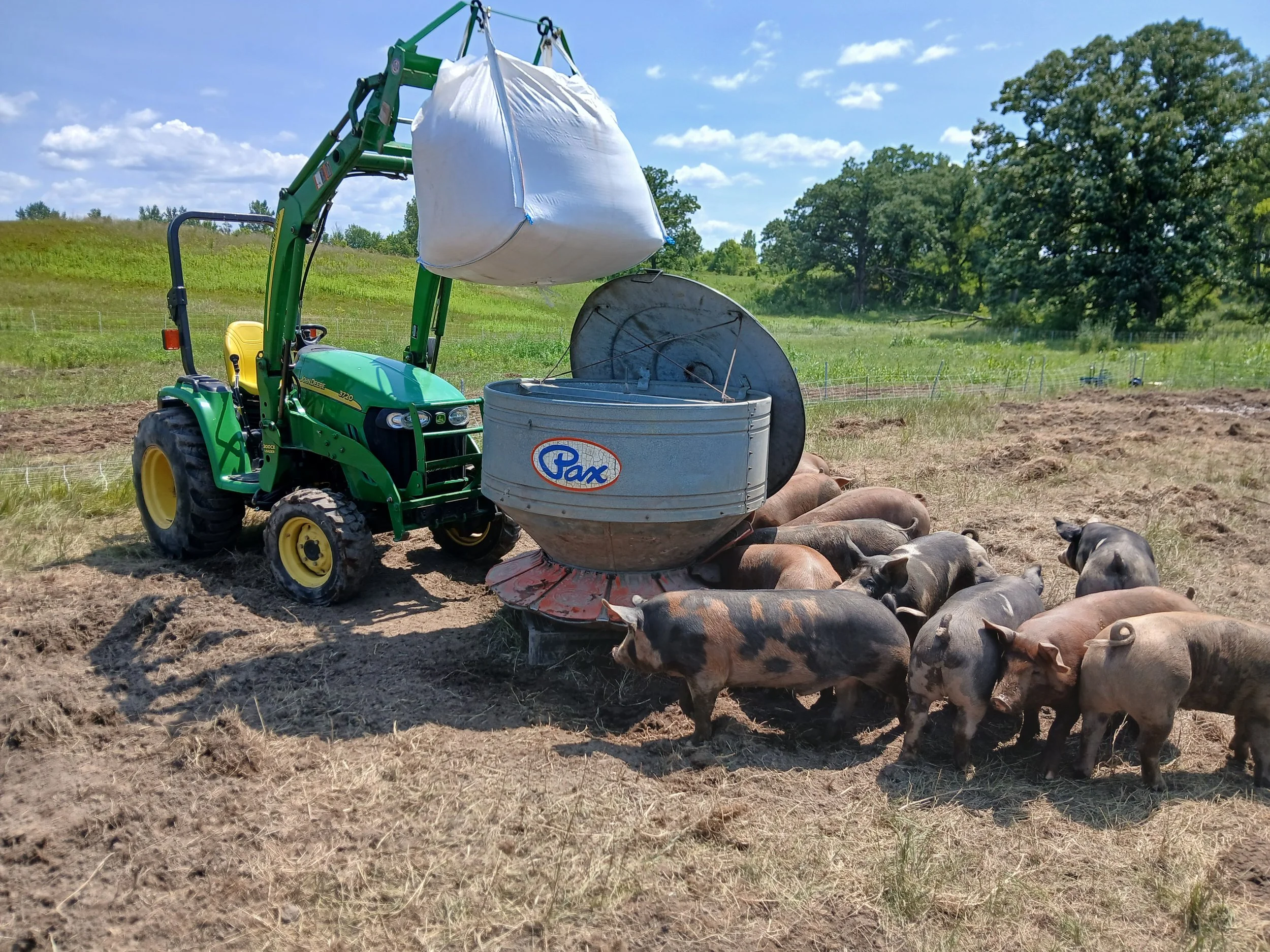
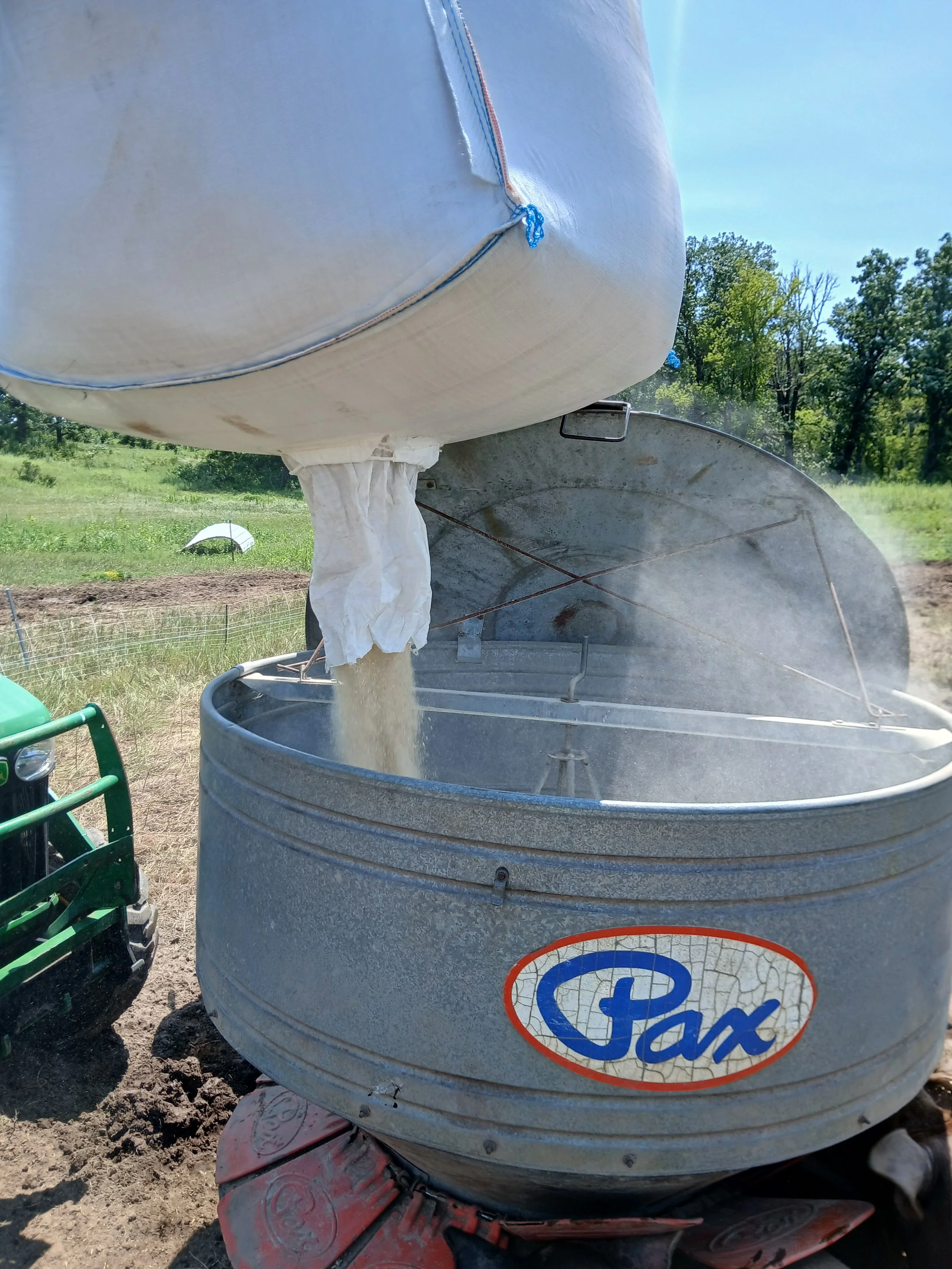
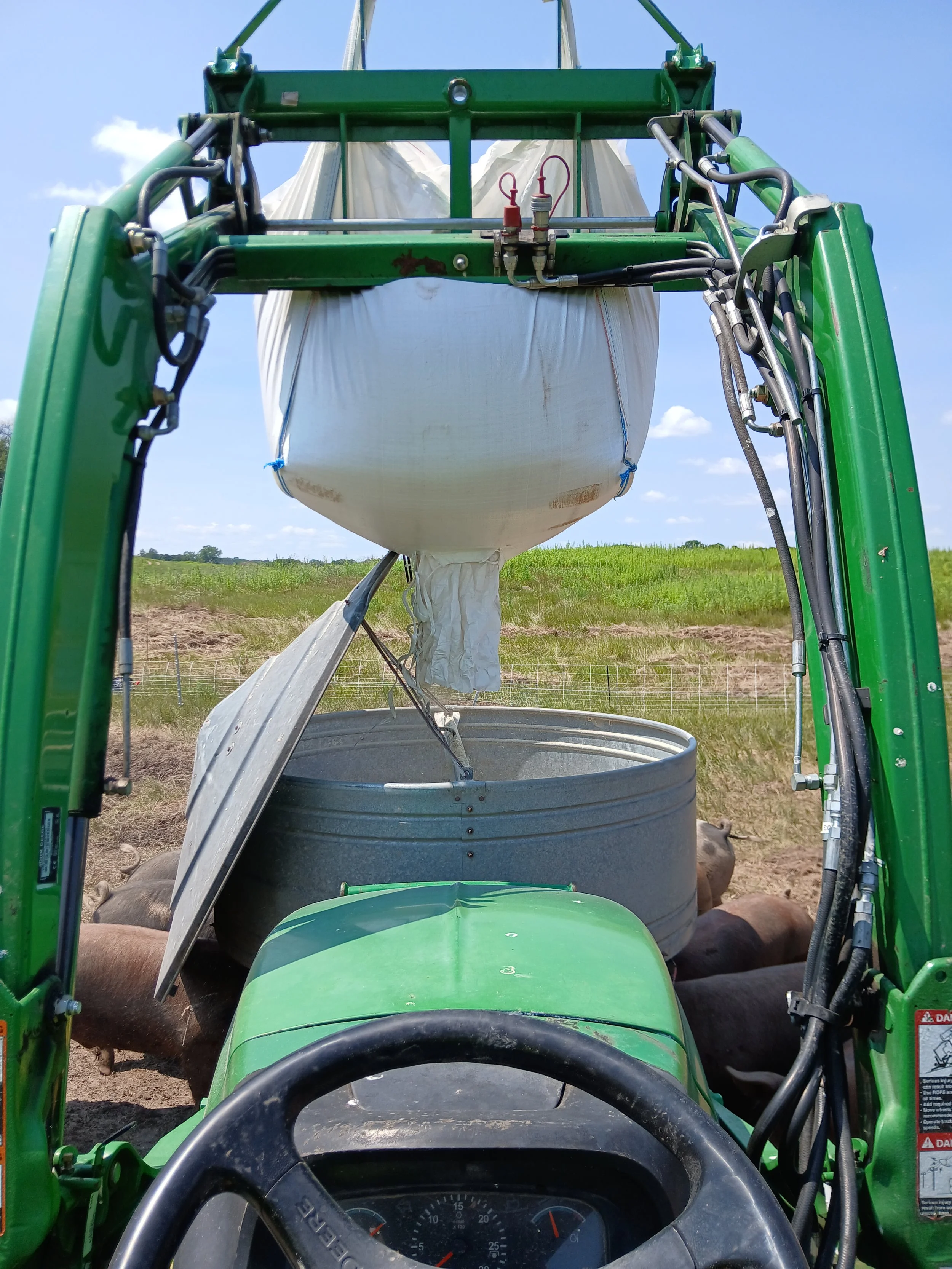
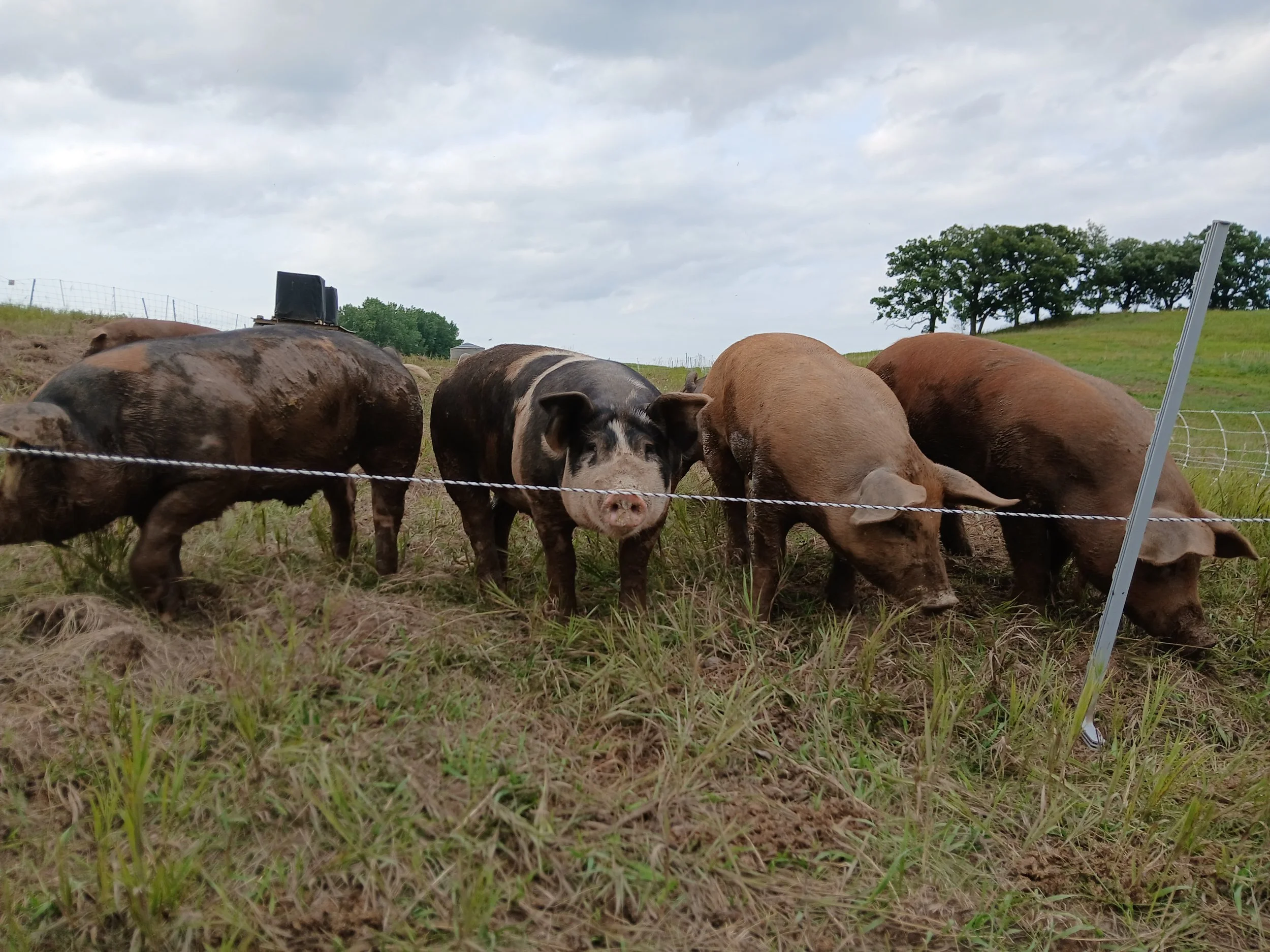
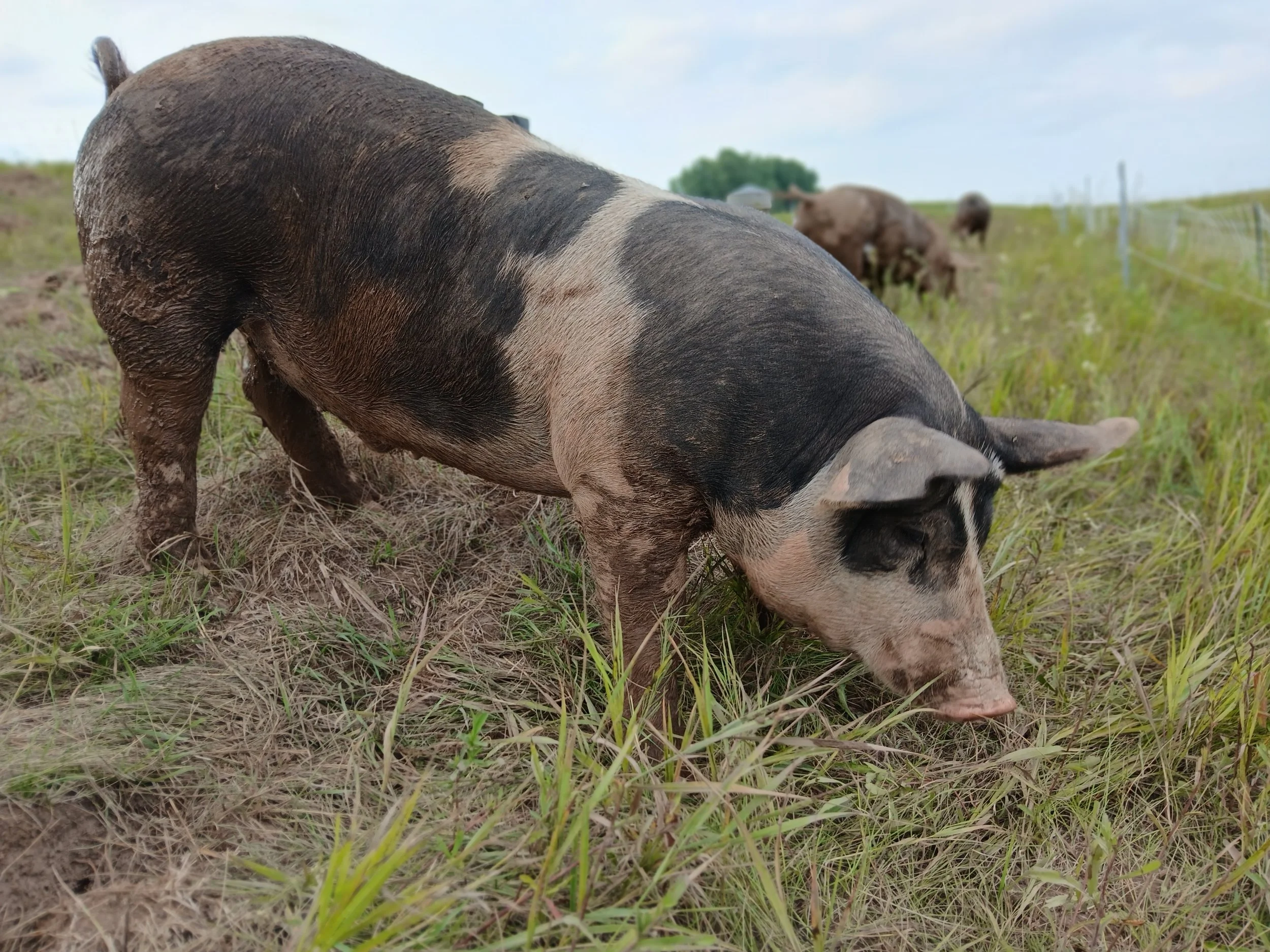
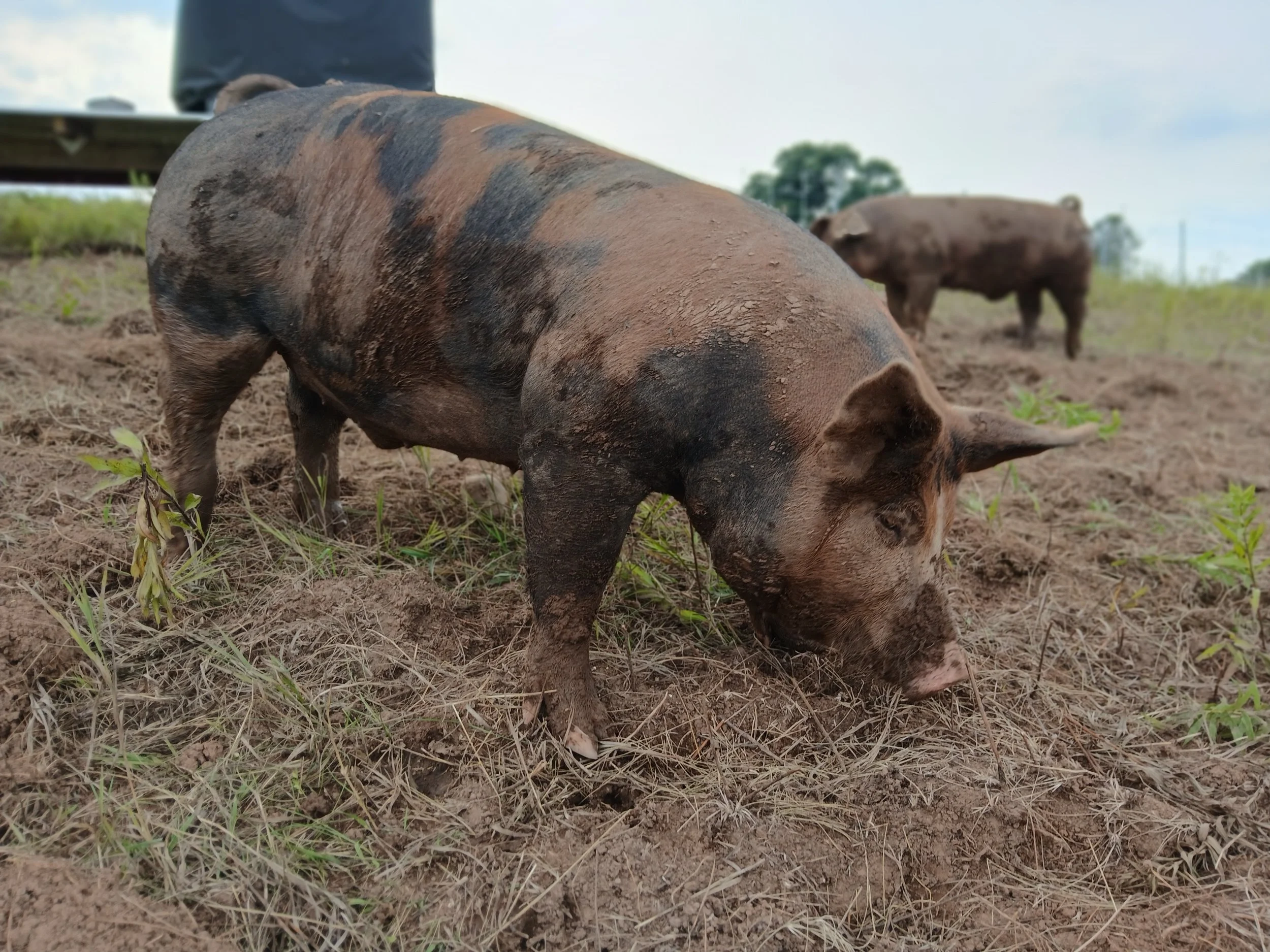
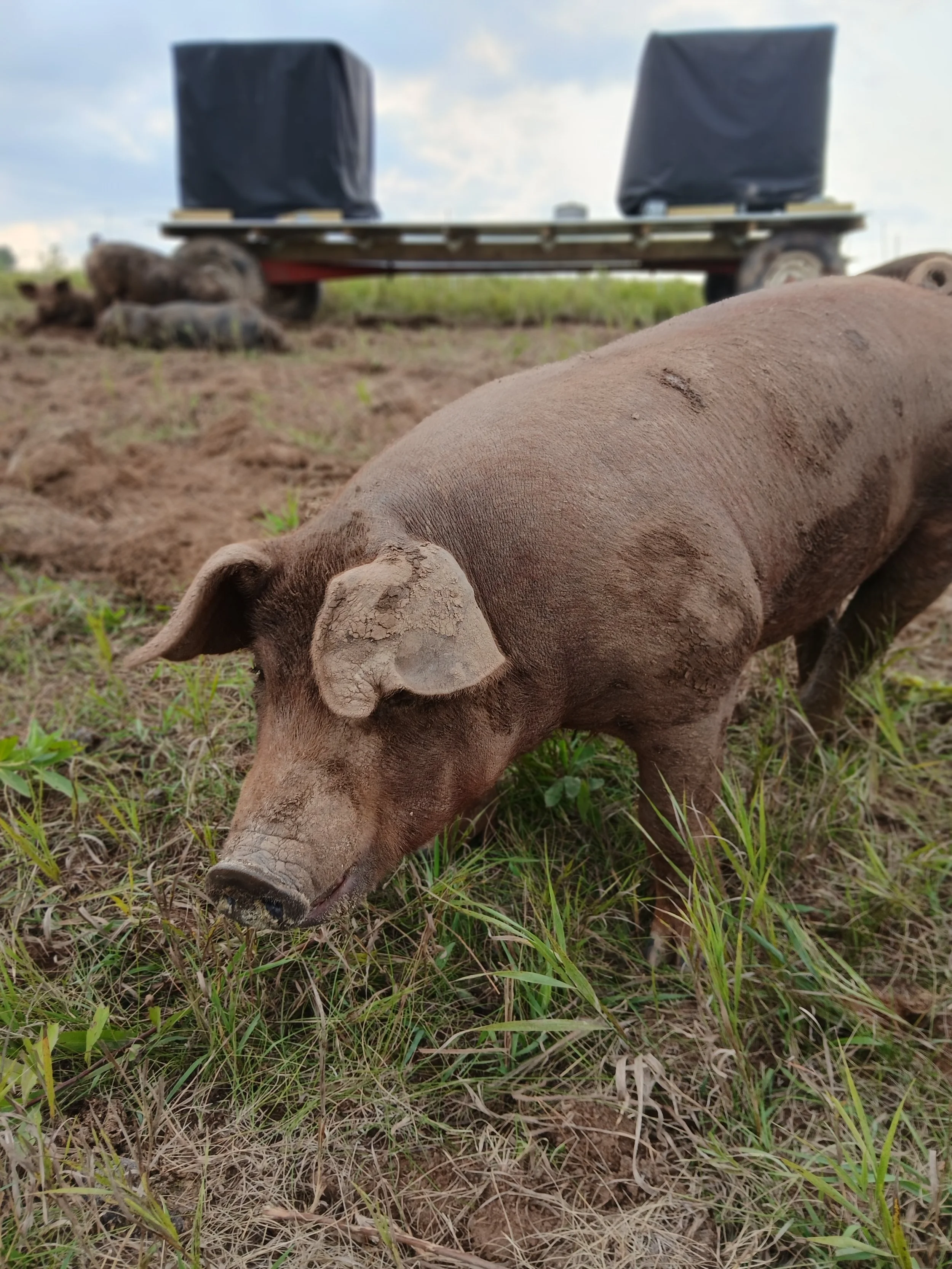
So let’s start with some highlights. We moved the pigs six times, for a total of seven paddocks so far. They’ve rooted up, grazed, and trampled close to two acres, eaten up nearly 6,000lbs of feed and are growing extremely well. While doing all that work with their mouths and snout, they’ve also done a lot of work with their back end, fertilizing as they go!
Now the challenges….
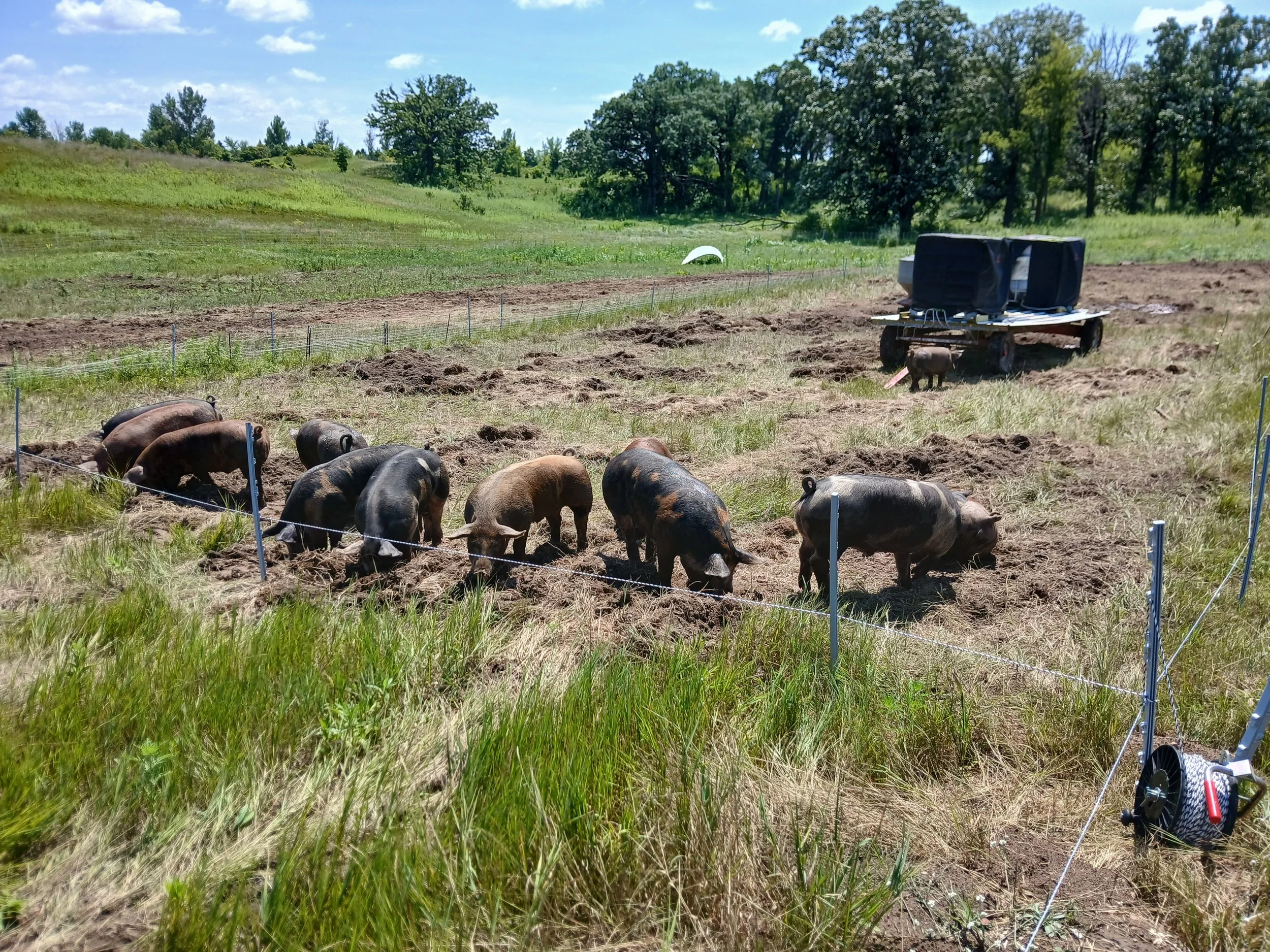
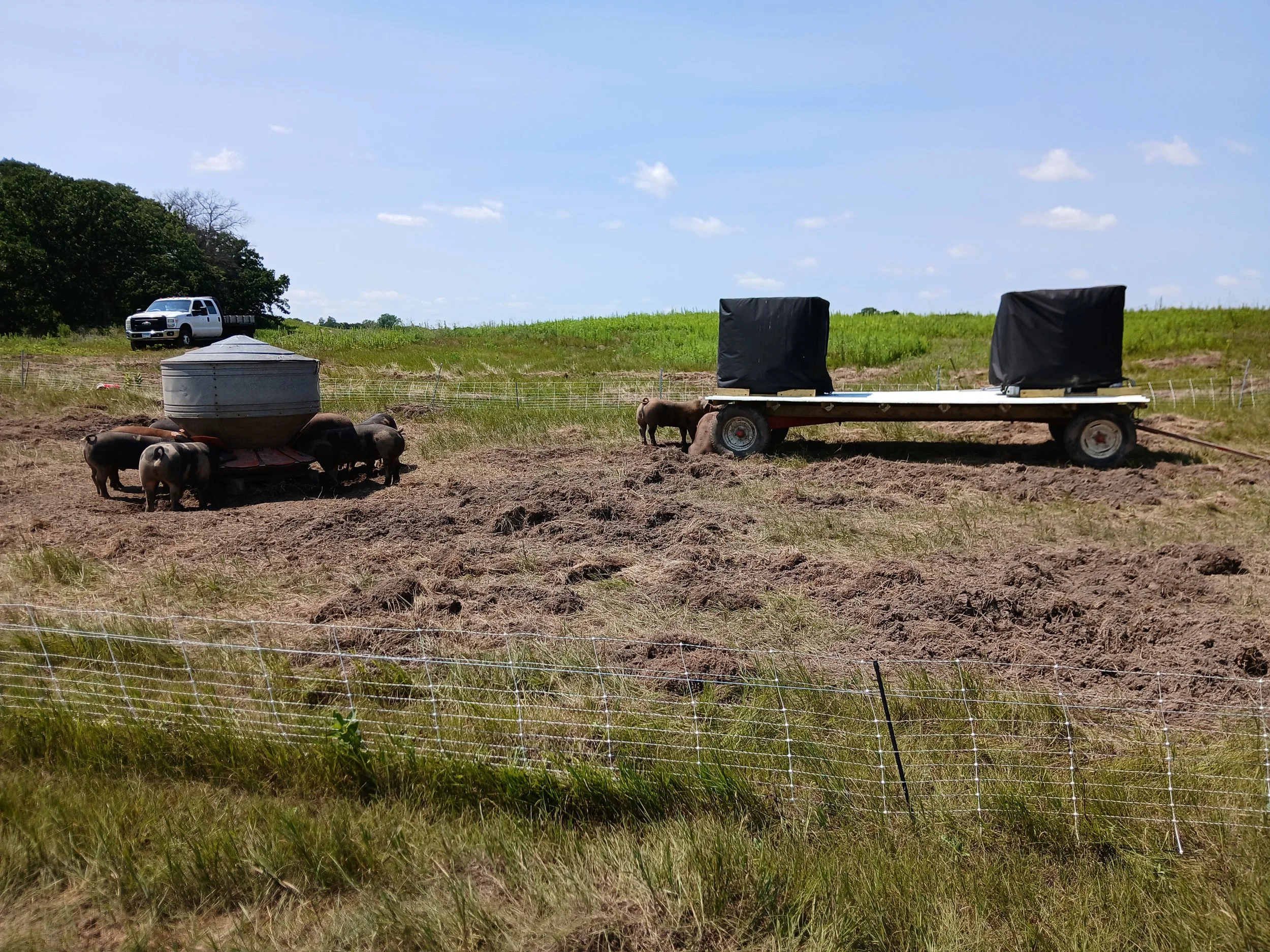
Our biggest challenge by far has been inconsistent rooting. Unlike in the forest at our home, we were not seeing consistent rooting effort or concentration in the prairie. We’ve had a couple paddocks where they rooted really heavily throughout, but mostly its been really patchy.
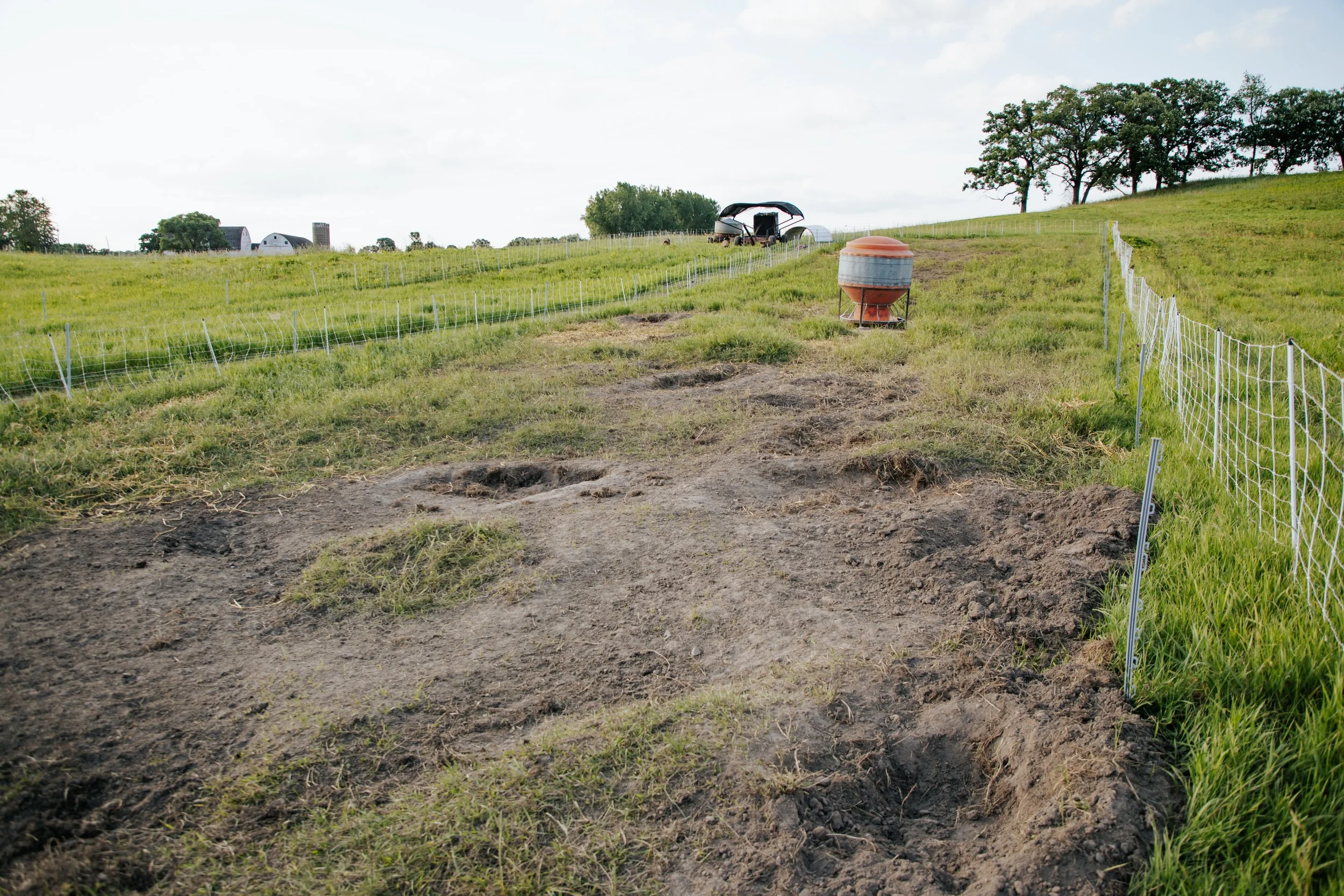
Patchy rooting
Many patches of grass untouched, other areas rooted out heavily
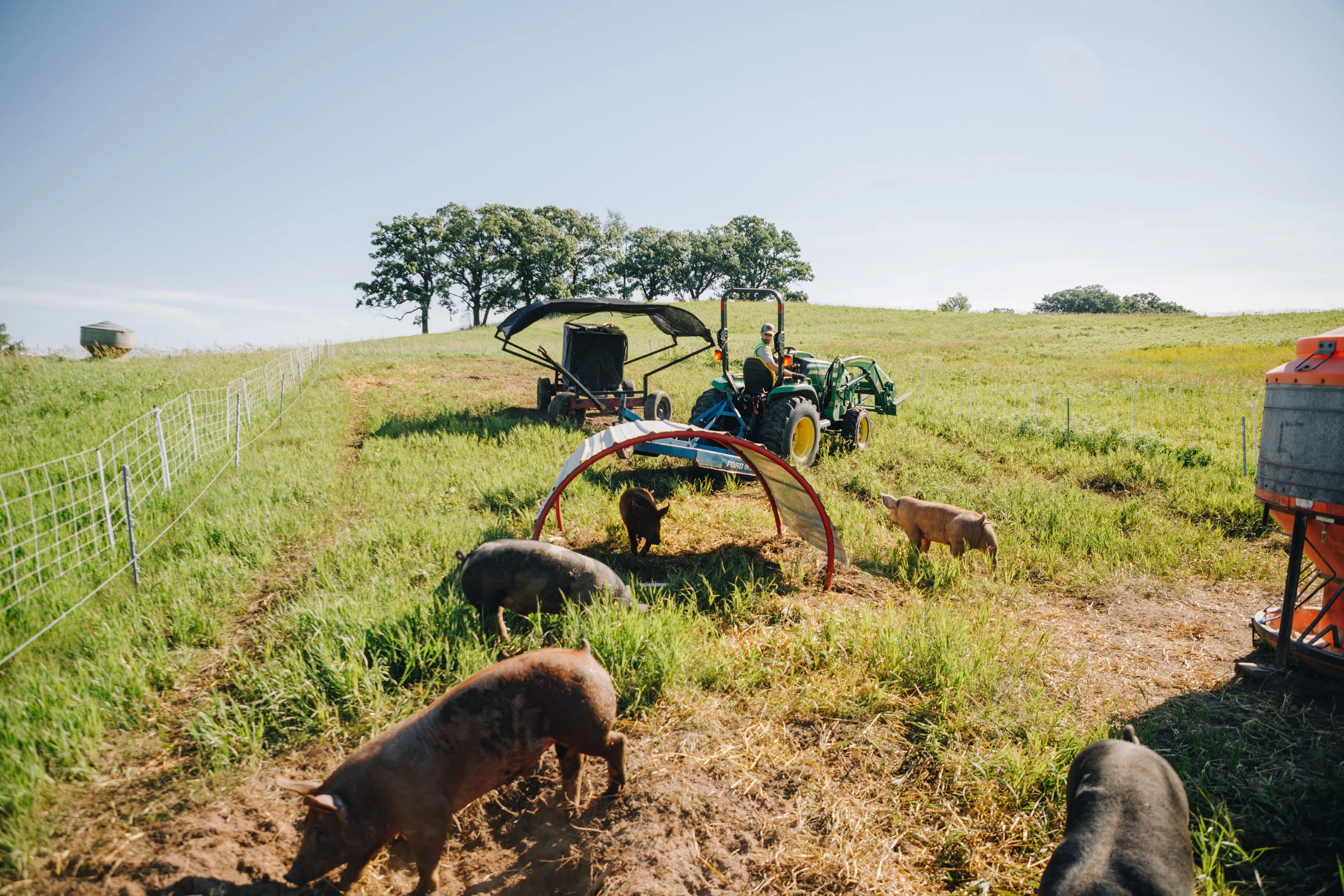
The first change we made to counteract this is set up long, narrow paddocks. Then we (park staff Monday to Friday or us on weekends) would move their water and shade wagon each day. We did this because under their wagon was always heavily rooted and disturbed from all their lounging and hoof traffic. This at least gave us a solid strip of disturbance down the length of the paddock.
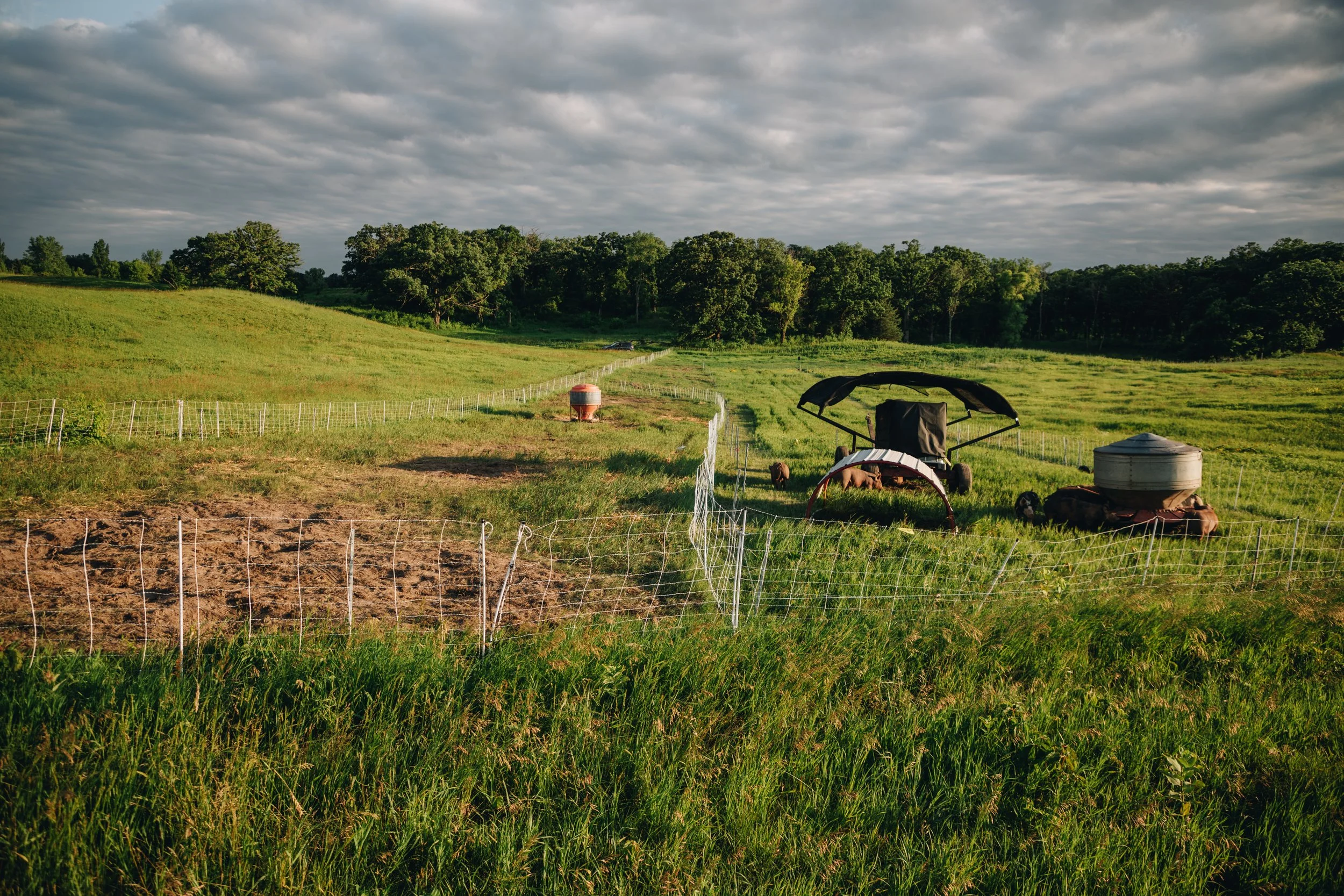
Long narrow paddocks
The one on the left was just vacated
The second thing we did is implement strip grazing. The idea is to give the animals a small strip within a larger paddock each day. Imagine a football field with the 5 yard lines throughout. Each day we give them 5 yards until they’ve covered all 100. This adjustment has been fairly effective as each day they get fresh ground and are a little more motivated to root in that area, while continuing to eat from the feeder and lounge under the wagon where we started. With this a new challenge was created: more management. The park staff especially has to do a lot of extra daily work to keep this up.
One final adjustment we made, which was the county’s idea, was to disc the field with a tractor prior to moving the pigs in. I was skeptical of this idea and yet it’s been the most effective. Breaking up the sod really helps get the pigs started, in what is otherwise very hard work for their snouts.
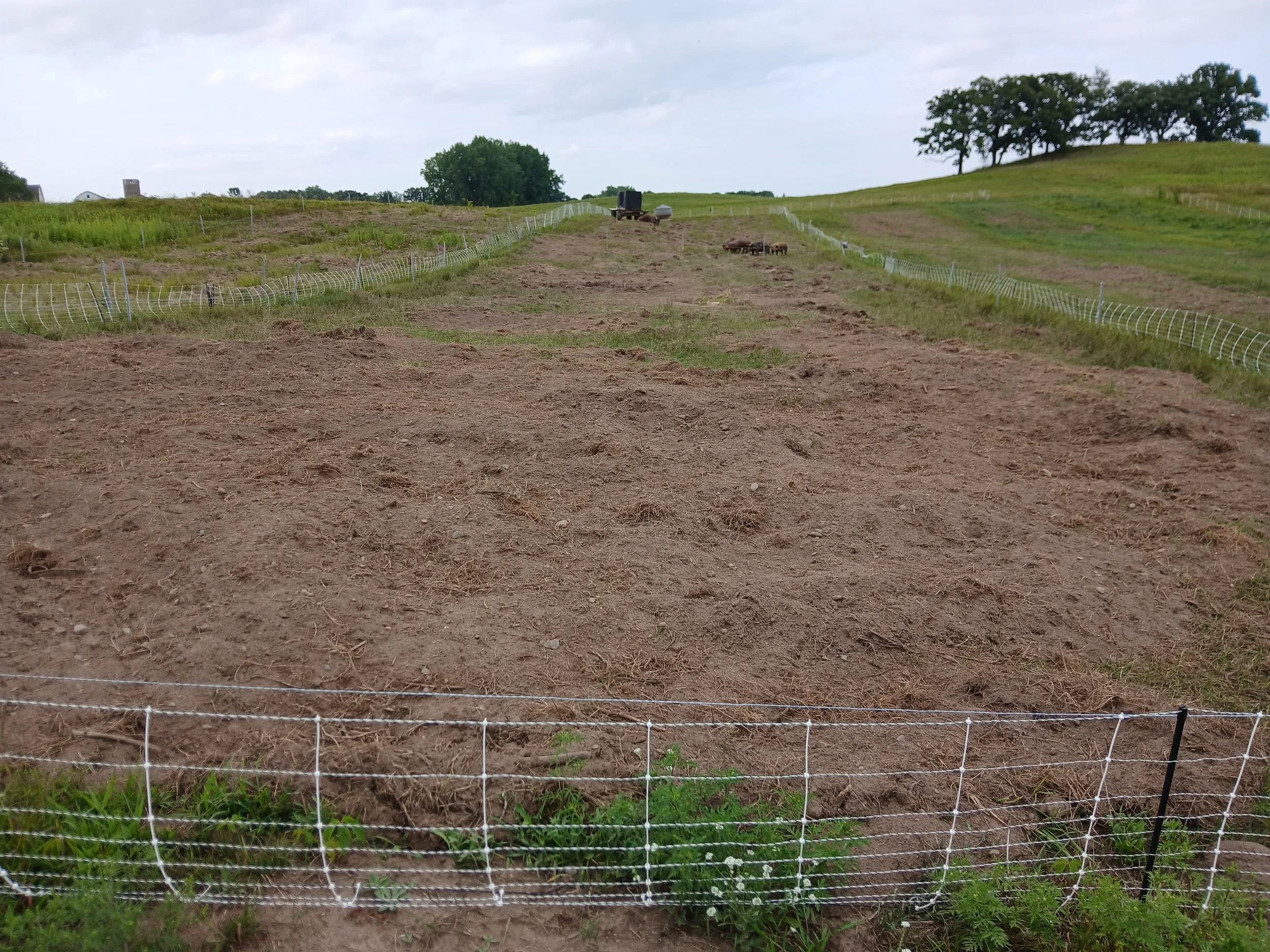
Rooting progress
Left - disced paddock, up next
Center - Current paddock
Right - Old paddock
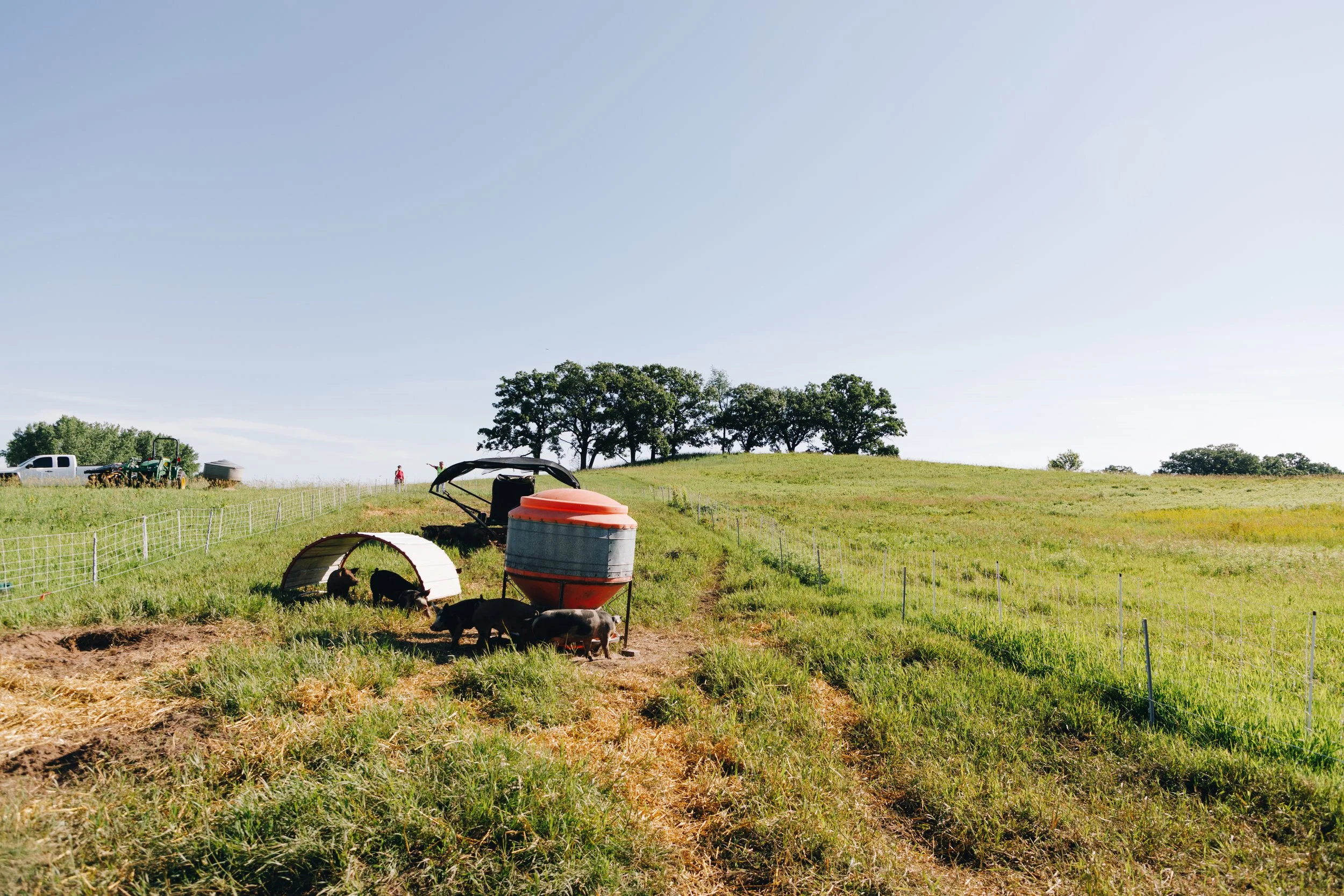
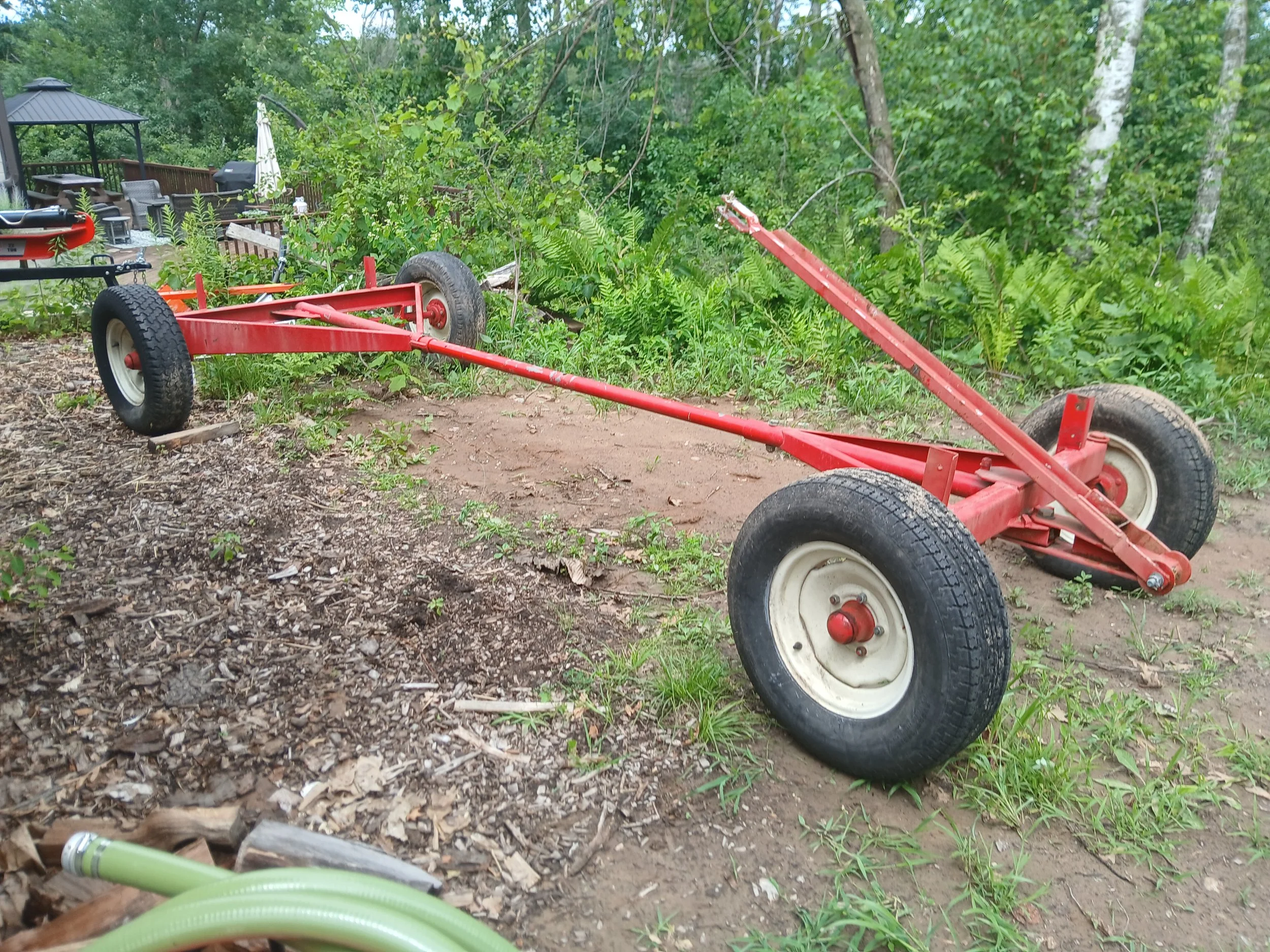
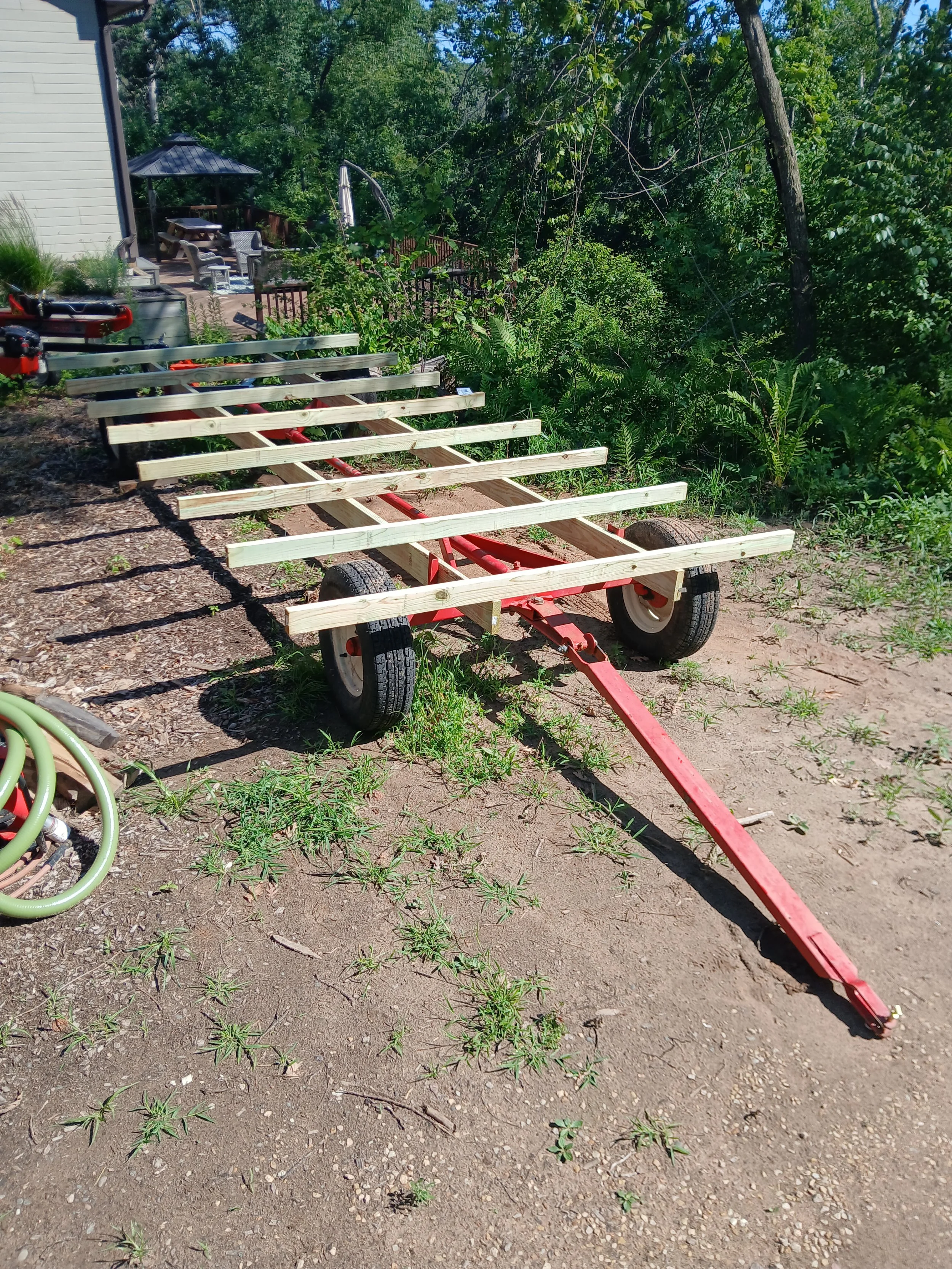
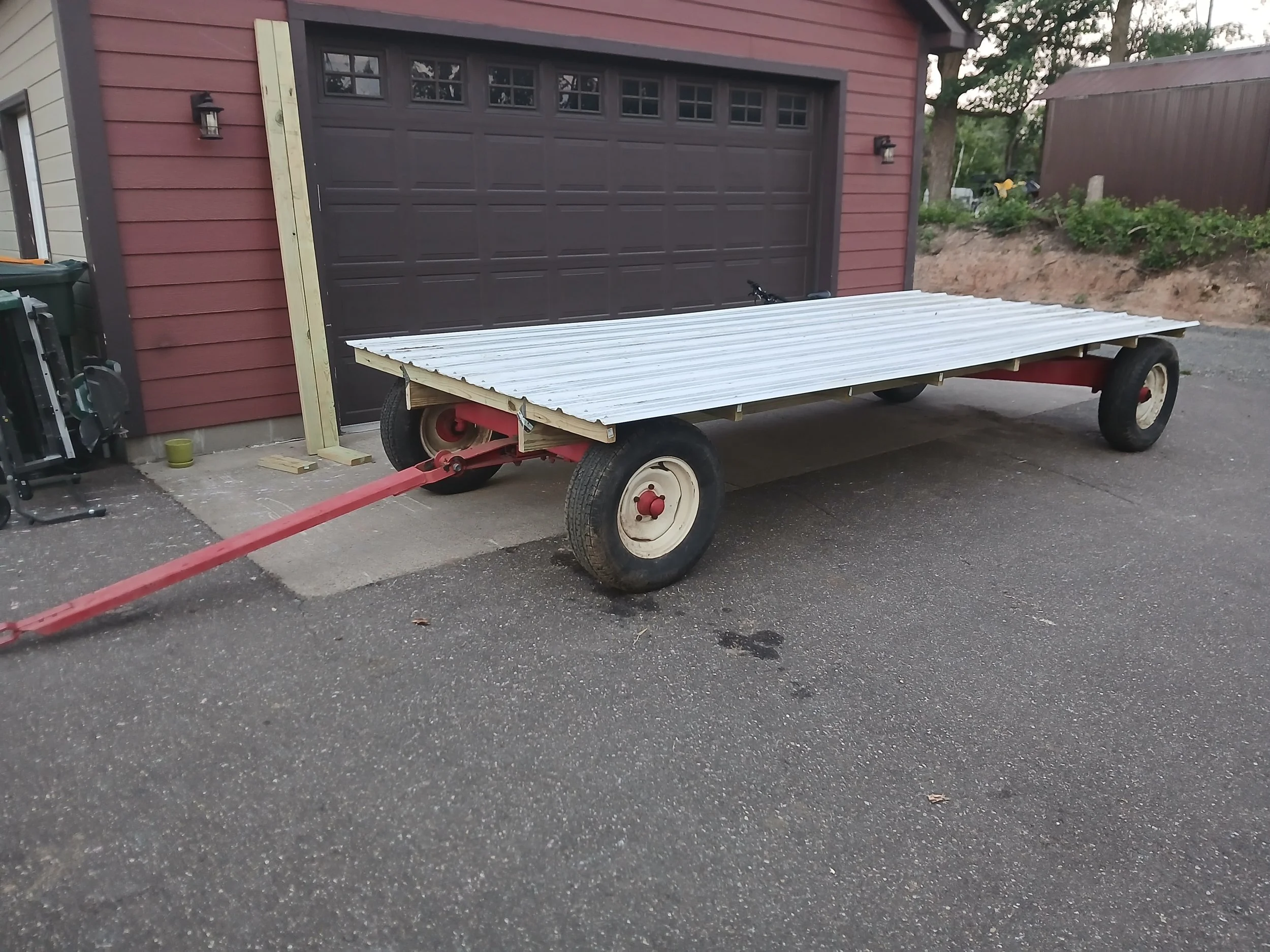
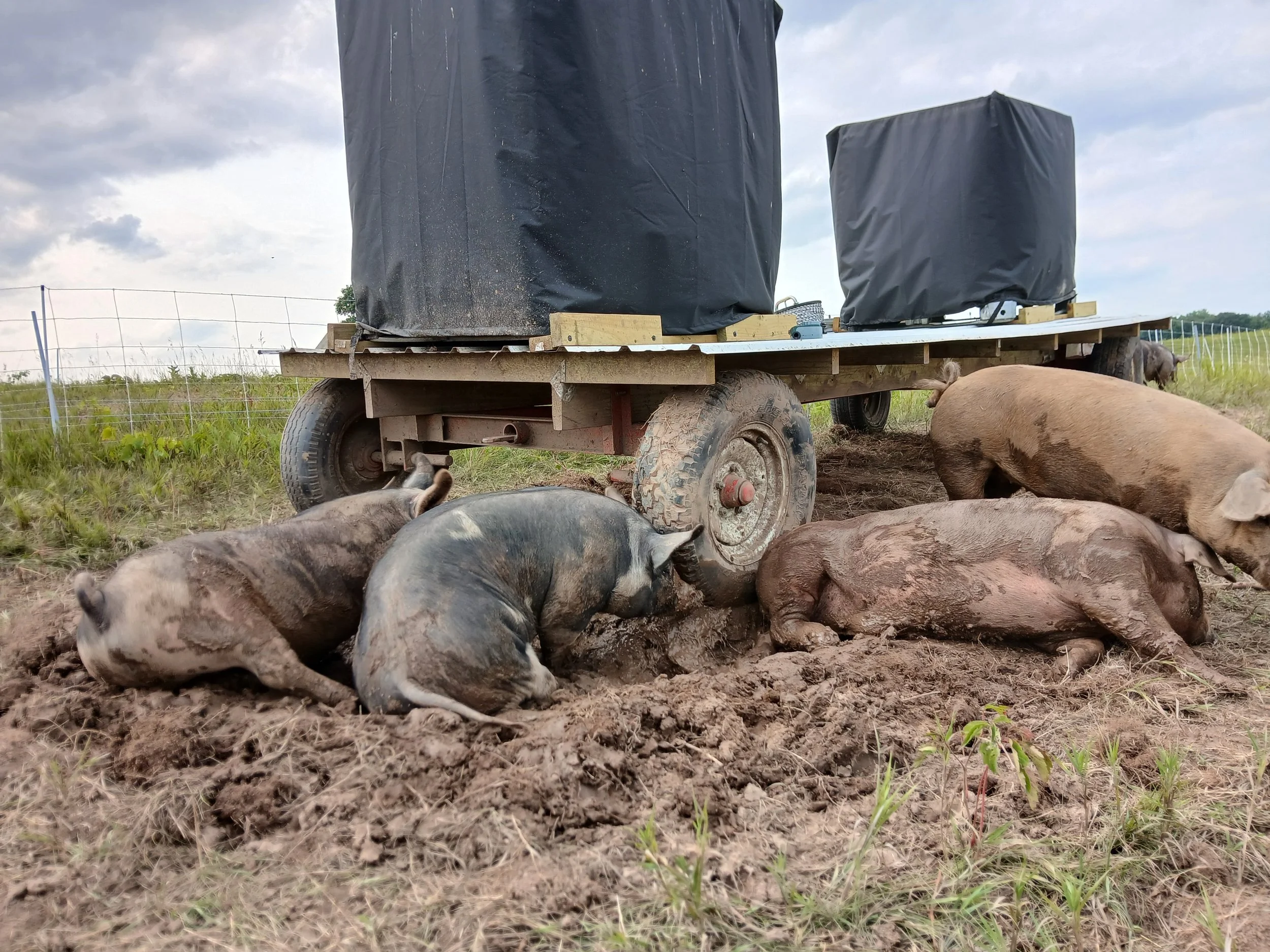
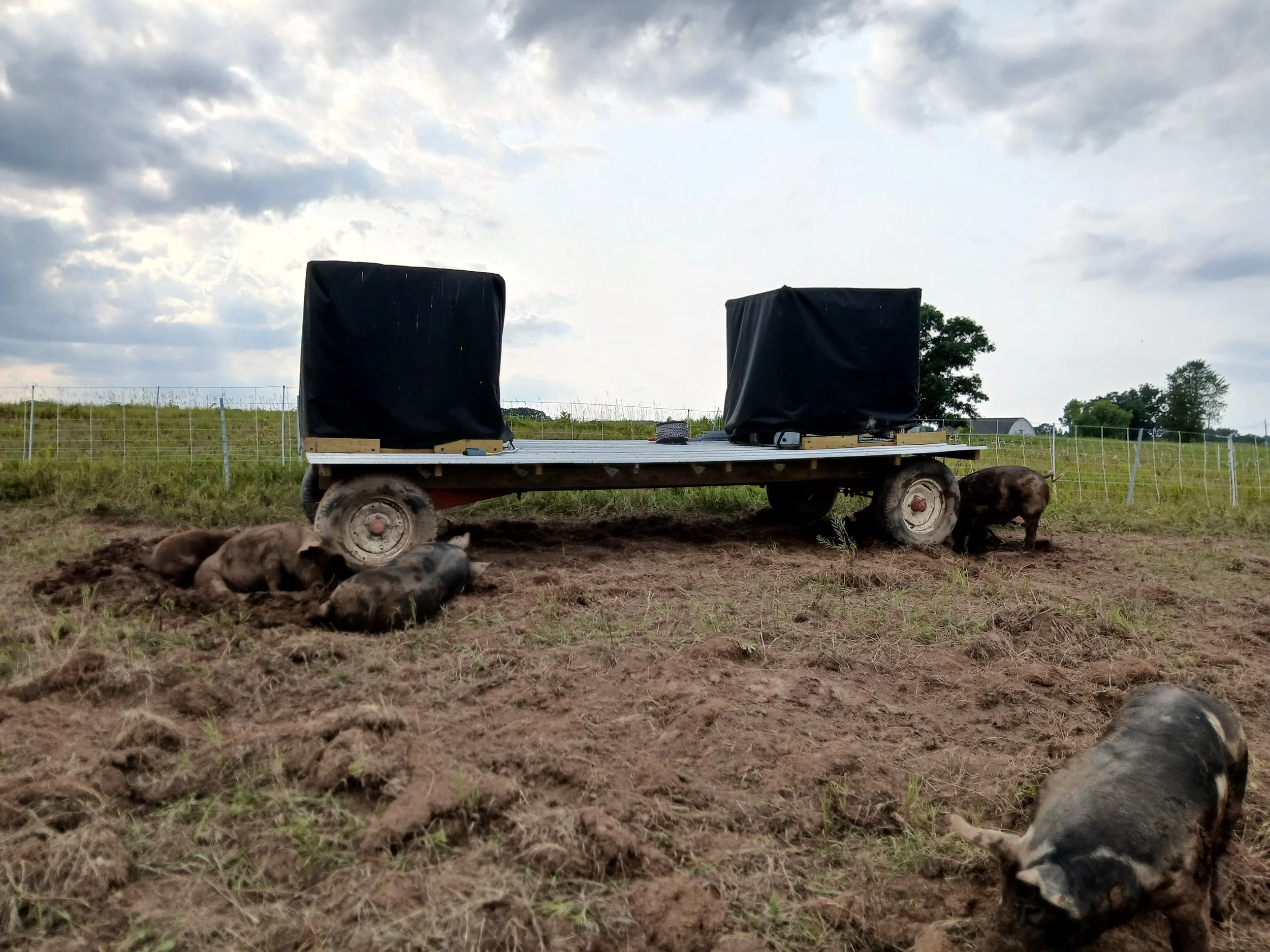
Another challenge we’ve had is shade. Pigs do not sweat, therefore they need shade, cool dirt, or even better - a wallow to lather up in mud and cool down. Early on we built a shade wagon that carried their water tank for drinking and had shade cloth stretched above, and it worked well, but only for so long. As the hogs grew our original wagon became undersized and they had to fight for relief from the sun. This original shade wagon also lacked true shelter from rain, so we had to move around another shelter, making paddock moves more challenging.
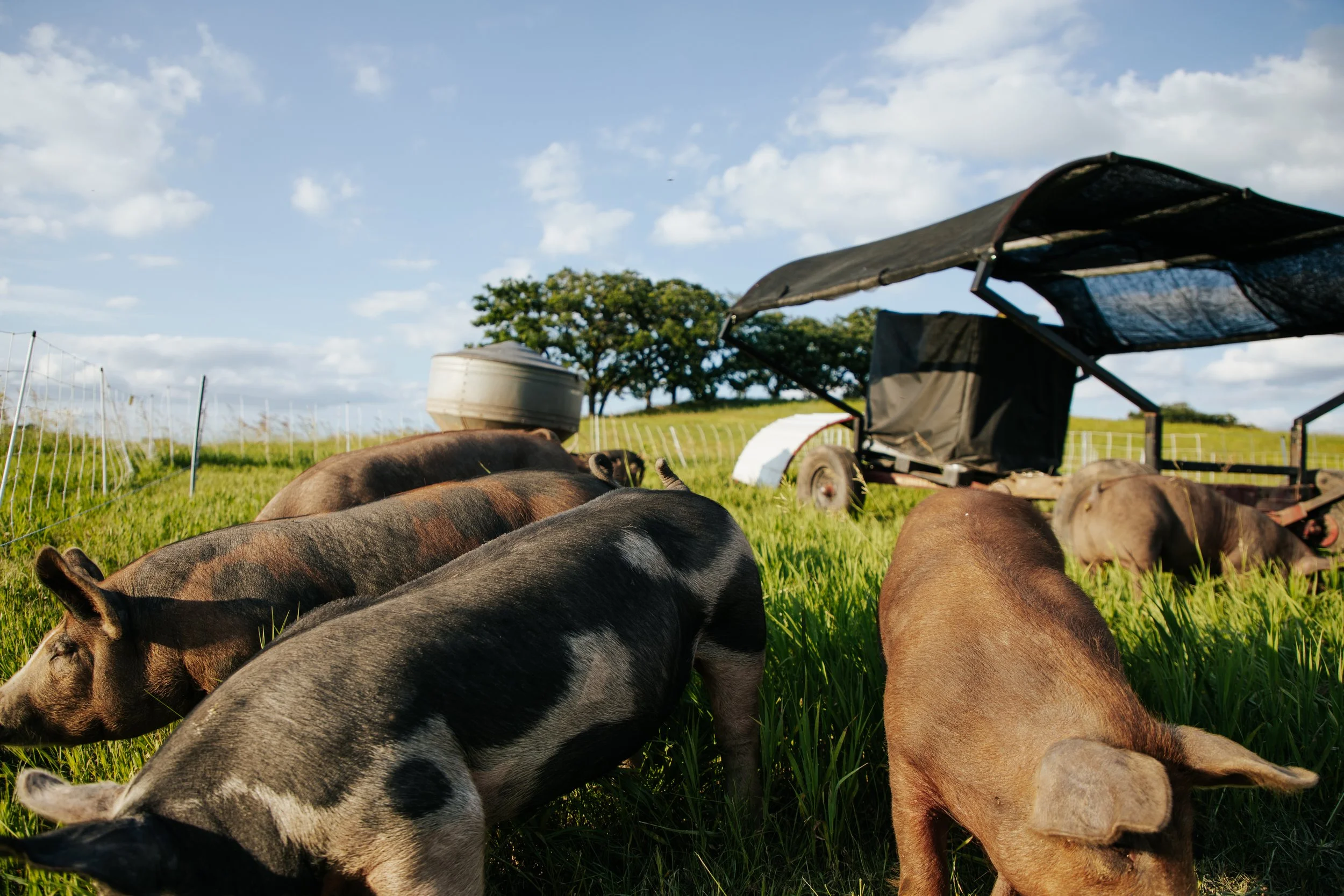
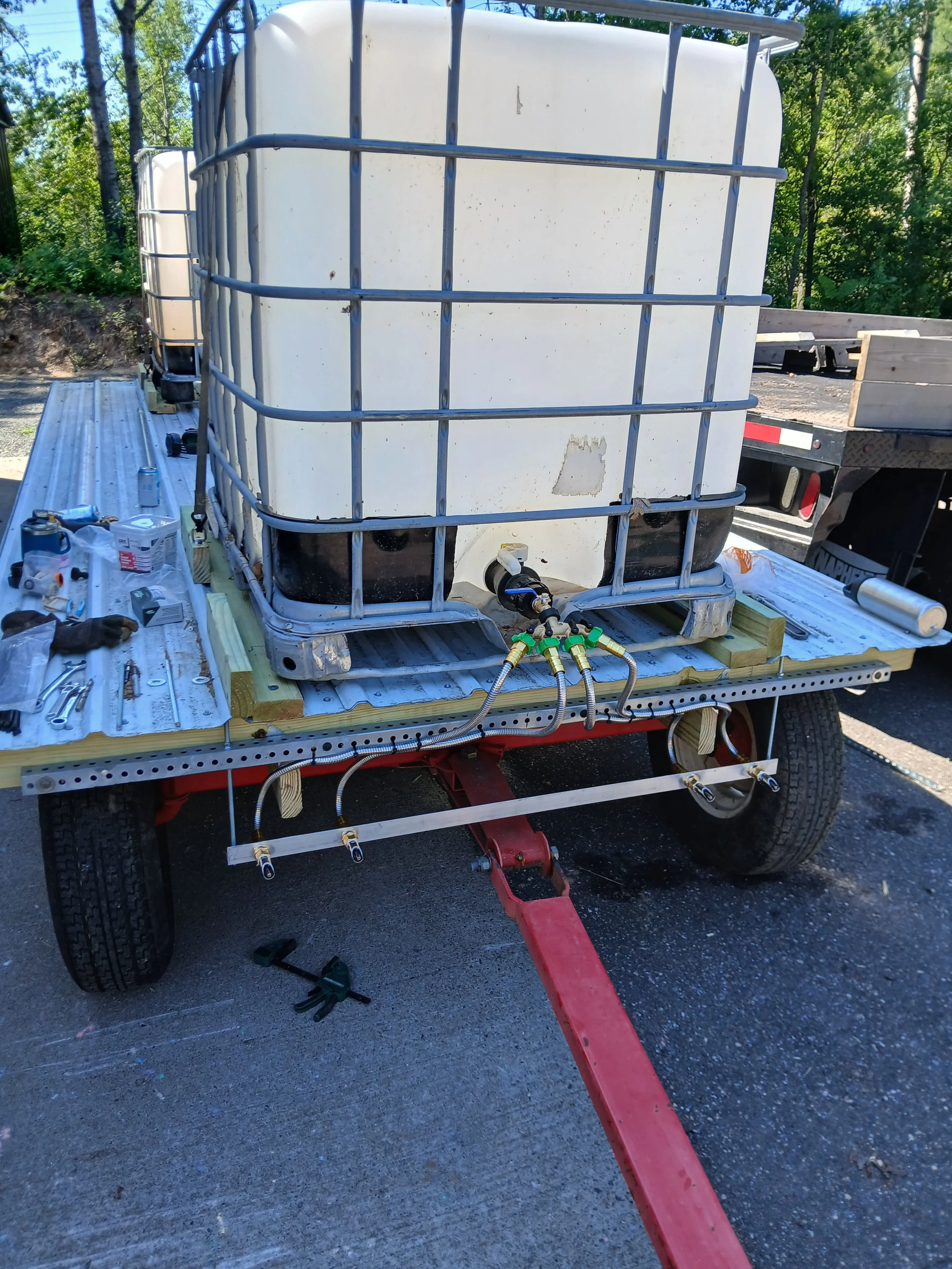
To address this we developed a larger, dual tank, shade wagon that also serves as shelter for the hogs. This provides adequate shade, shelter, and now twice the water storage, reducing the frequency that the park has to refill. To keep things light, we joked that this second prototype was the Swinnebago. Well the name stuck and the park staff calls it this with no shame or even a chuckle anymore.
Our final challenge was the heat in July. No matter how much shade you provide, 95 degrees and 70 percent humidity is HOT for swine. To make sure they were comfortable the park staff would time their visits so that a wallow was provided mid to late afternoon. (We simply dump some water in the dirt and the pigs roll around in it, making a sort of pudding consistency out of the mud. They LOVE a wallow on a hot day. Who needs TV when you can watch pigs roll around in a wallow?!)
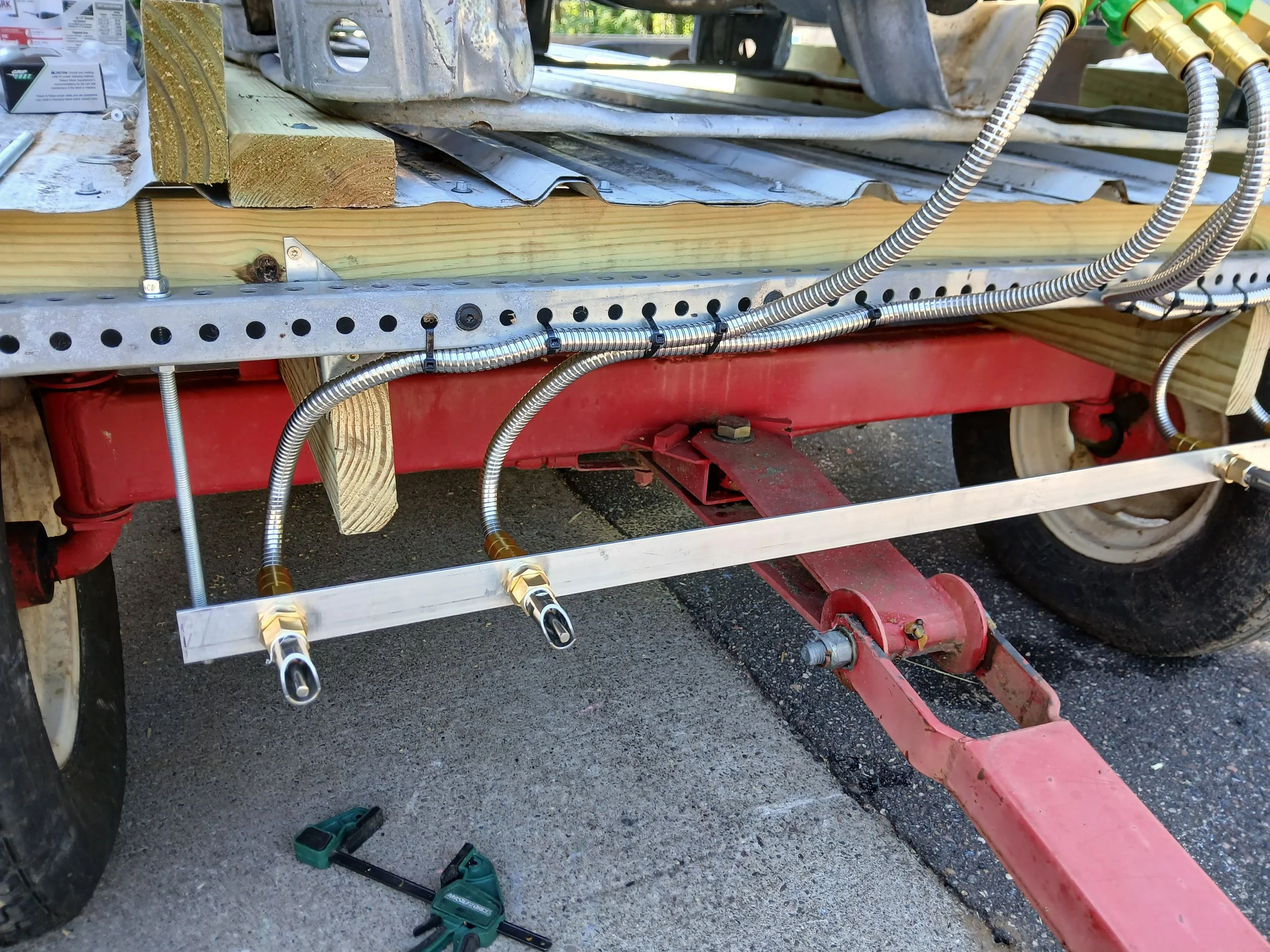
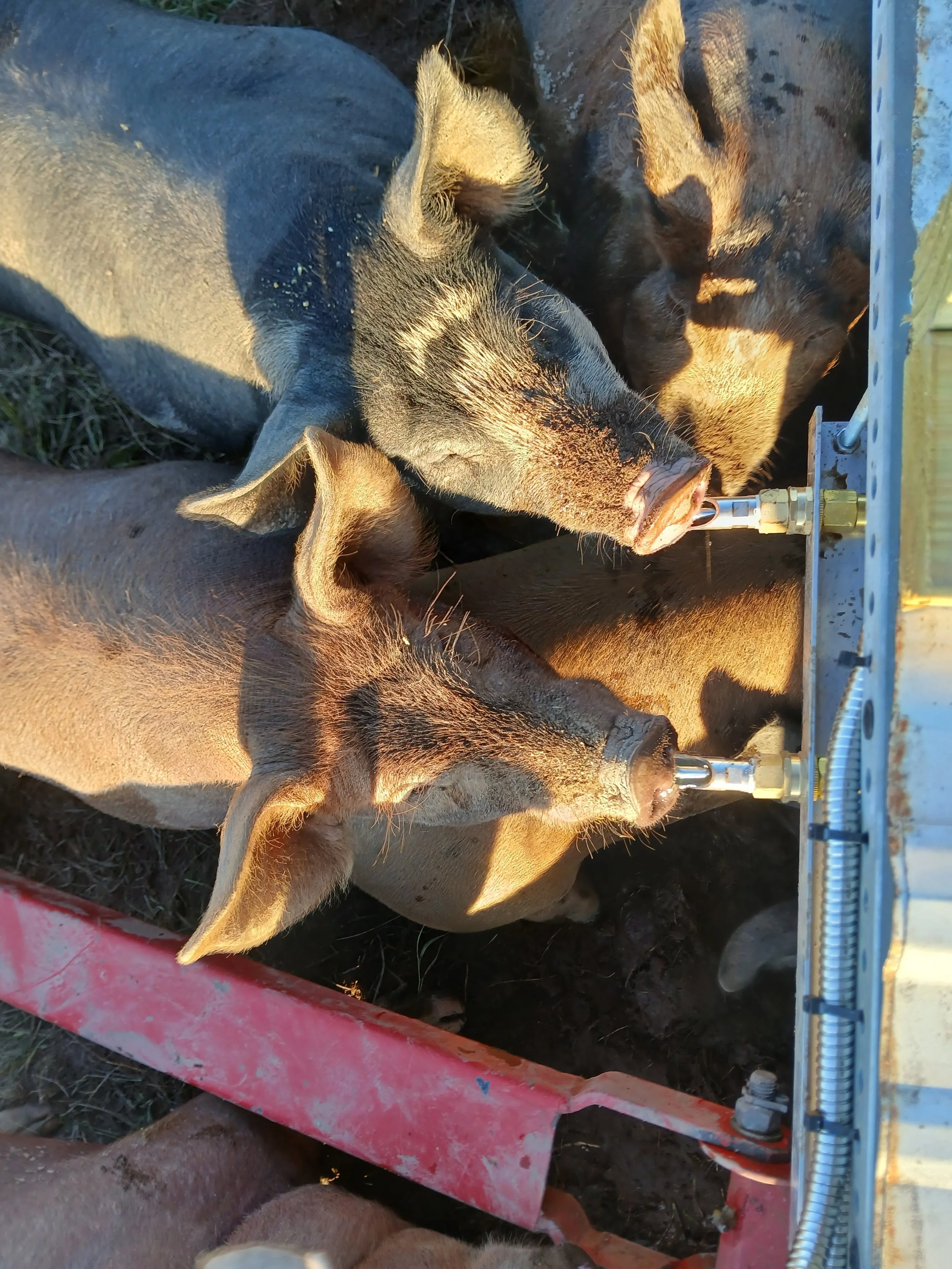
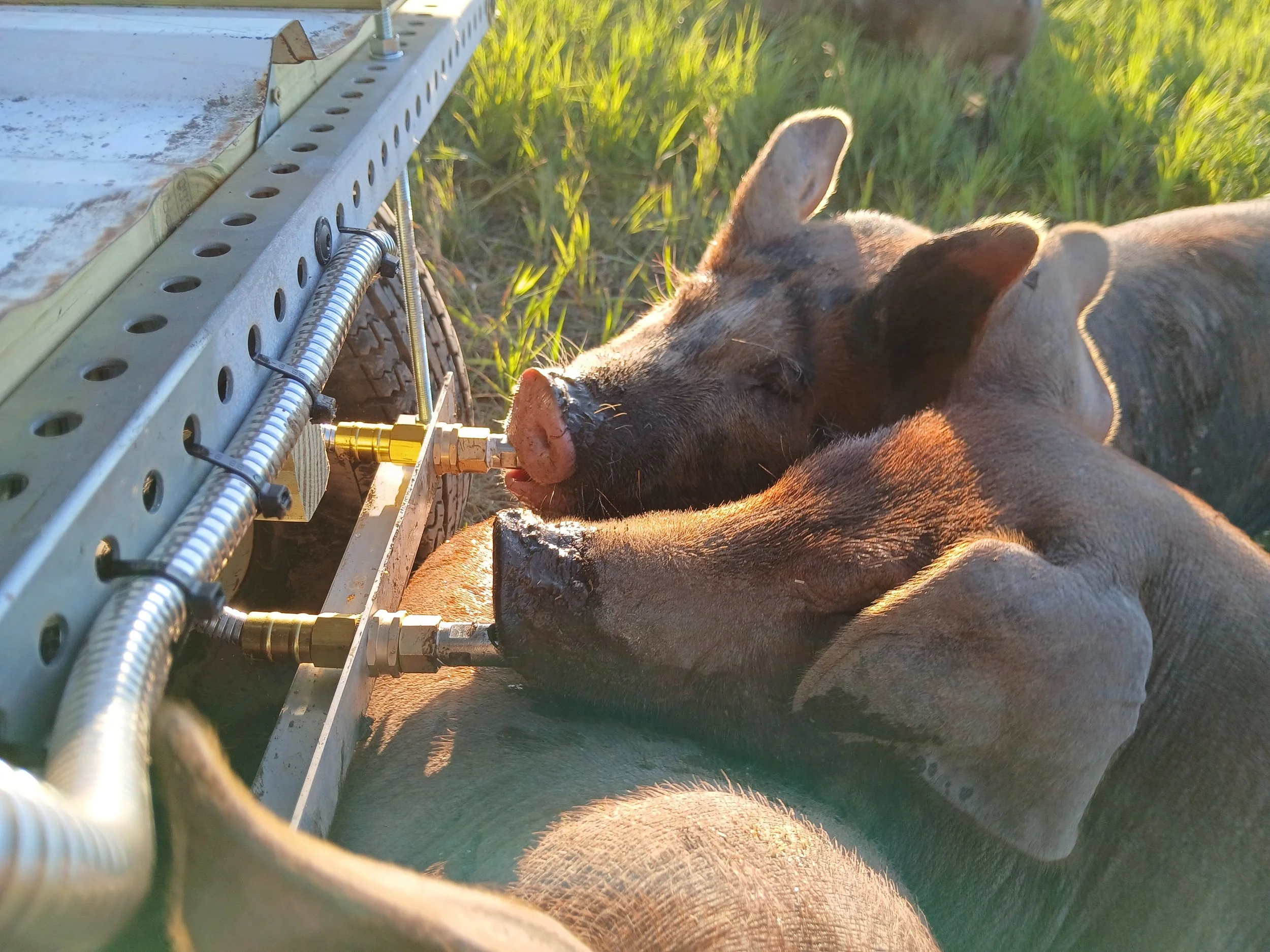
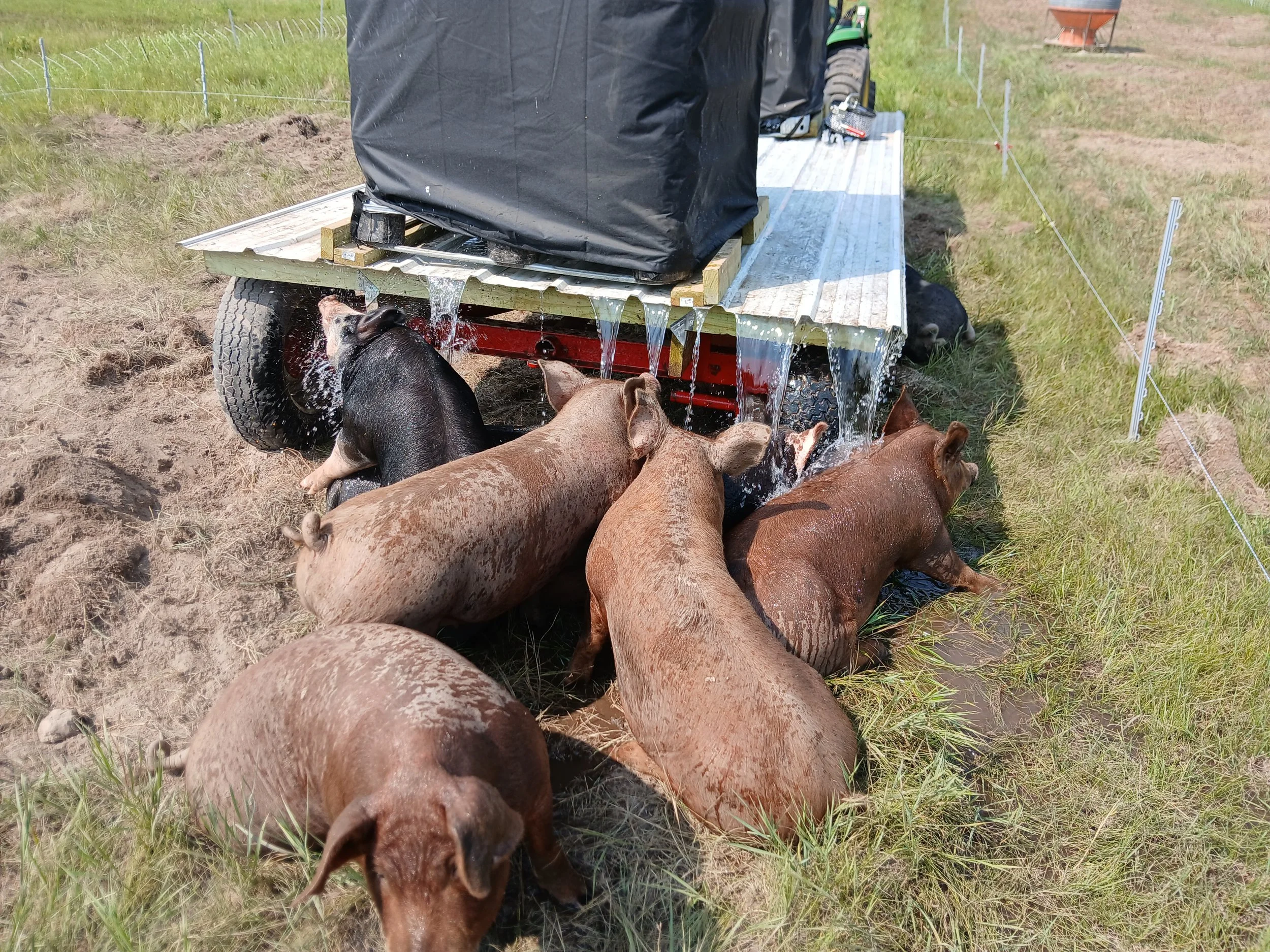
The final solution came from friends Brandon and Jenna at Firm Foundations Farmstead who have a couple pigs and wanted a remote watering solution. We had to adjust their solution to work in a remote place with no well or pressurized water but the end result has been amazing. We installed a $25 battery powered sprinkler controller and connected it to one of the water tanks with a short garden hose. It runs on a timer and opens up every 6 hours allowing water to dribble out for 30 minutes. This cools off the metal roof of the shelter via evaporation and also drips down onto the pigs, who are now trained to lay under the eve of the shelter when it starts dripping. This drip system provides frequent enough water that the wallow remains wet and they can cool off any time they need.
In conclusion, after encountering all these challenges, having to problem solve and innovate, and just staying focused and committed to the project there has been some good reflection and learning. The first is that real experience requires time, repetition, and hands on learning from mistakes. A phrase I read in a book recently comes to mind “The opposite of success is not failure, it’s giving up”. This phrase reminds me of another powerful quote from Joel Salatin, one of my favorite authors, he says “if something is worth doing, it’s worth doing poorly first”. His twist on the traditional perfectionist adage “if something is worth doing, it’s worth doing right” captures the essence of learning and perfecting a skillset. We must not be afraid to try things. And when we do and they don’t work out, we adjust course and keep on trying.
All in all, we are very proud of our work and the hogs’ work at the park. Regardless of whether this opportunity presents itself in the future or not, we’ve provided good service, been diligent in our work, and we’ve done what we set out to do. And we believe the experience is worth sharing.